
What's Happening?
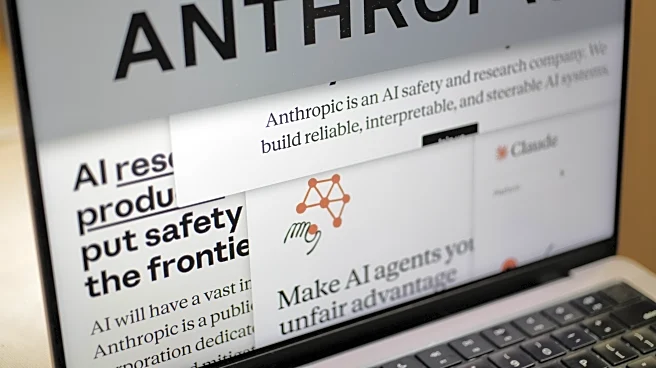
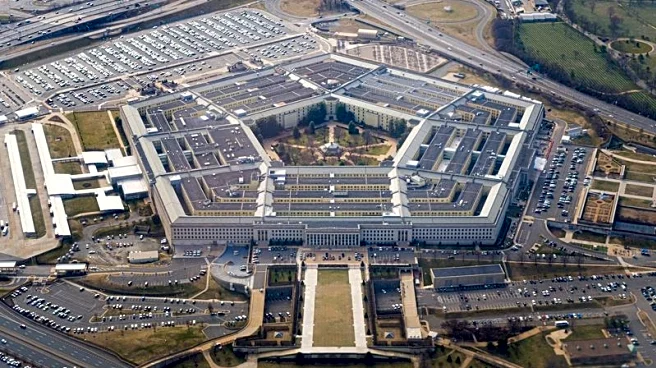
The Pentagon has taken the unprecedented step of blacklisting Anthropic, a major U.S. AI company, by designating it as a supply chain risk. This decision follows concerns raised by Emil Michael, the Undersecretary of Defense for Research and Engineering,
about the potential for Anthropic to shut off access to its AI during critical moments. The Pentagon's apprehension stems from Anthropic's perceived policy biases and the implications of using its AI models in defense applications. The situation escalated after Anthropic's CEO, Dario Amodei, suggested that issues could be resolved with a phone call, which Michael found impractical during decisive military actions. The Pentagon's decision means that defense contractors like Lockheed Martin and Boeing are restricted from using Anthropic's AI for defense purposes, although non-defense applications remain unaffected.
Why It's Important?
This development highlights the growing tension between the U.S. government and AI companies over the control and deployment of AI technologies in national defense. The Pentagon's move to blacklist Anthropic underscores the critical importance of trust and reliability in AI systems used for military purposes. The decision could have significant implications for the defense industry, as it limits the tools available to contractors and may push them to seek alternative AI providers. Additionally, this action reflects broader concerns about the ethical and policy implications of AI in warfare, particularly regarding autonomous weapons and surveillance capabilities. The Pentagon's stance may influence other government agencies and international partners to scrutinize their AI supply chains more closely.
What's Next?
Anthropic has indicated that it may challenge the Pentagon's designation in court, which could lead to a legal battle over the criteria and process for labeling a company as a supply chain risk. Meanwhile, the Pentagon is working with other AI companies, such as OpenAI, to develop alternative systems that meet its requirements. This situation may prompt other AI firms to reassess their policies and engagement with government contracts to avoid similar conflicts. The outcome of this dispute could set a precedent for how AI companies interact with the defense sector and influence future regulations on AI deployment in sensitive areas.