




What's Happening?
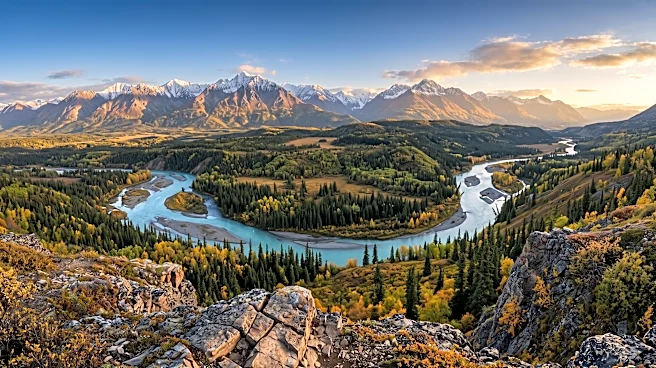
The Alaska Department of Natural Resources (DNR) is preparing to surrender claims to as much as 5.7 million acres of land across the state. This action comes as Alaska approaches its goal of obtaining 105 million acres of land from the federal government
under the Alaska Statehood Act. The state's requests currently exceed a federal law limit, which stipulates that Alaska can select no more than 125% of the acreage remaining to be transferred. As the balance of untransferred land shrinks, the state must relinquish some of its existing claims. The DNR has identified 18 targets for relinquishment, including land under Eielson Air Force Base, a bombing range near Fort Greely, and areas envisioned for roads. Each relinquishment involves a separate public process.
Why It's Important?
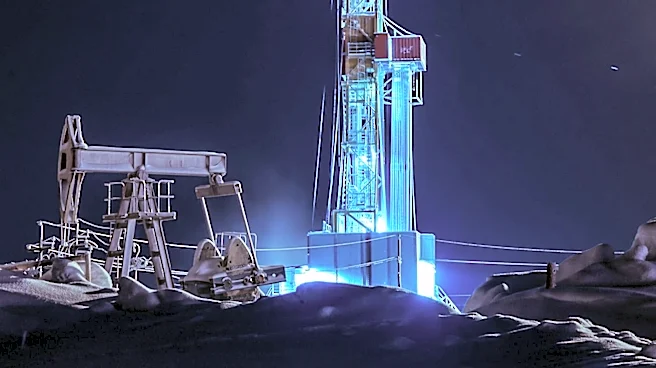
This development marks a significant phase in Alaska's decades-long effort to acquire land from the federal government, a process initiated by the 1958 Statehood Act. The relinquishment of claims, totaling an area larger than New Jersey, reflects the state's strategic prioritization of land assets as it nears its 105 million-acre entitlement. This process is crucial for Alaska's economic development, as state-owned lands, such as the Prudhoe Bay oil fields, have historically been vital for resource extraction and revenue generation. The careful selection and relinquishment of claims will determine the future availability of land for various purposes, including resource development, conservation, and infrastructure projects. The ongoing transfers and relinquishments underscore the complex administrative and legal framework governing land ownership and management in Alaska.
What's Next?
The Alaska Department of Natural Resources will proceed with separate public processes for each of the 18 identified land claims to be relinquished. Even after these relinquishments, the state is expected to remain above the 125% claim limit, indicating that more claims may need to be surrendered in the future. DNR officials have stated that as the state gets closer to the 105 million-acre limit, it will become more selective about the claims it retains, potentially holding valuable 'top-filed' selections in reserve. Any final decisions regarding these land selections will ultimately rest with future governors and DNR commissioners, suggesting a long-term, evolving strategy for land management in Alaska.
Beyond the Headlines
The process of land transfer and relinquishment in Alaska highlights the intricate balance between federal and state land management, resource development, and environmental considerations. The historical context of the Statehood Act, which granted Alaska the right to select vast tracts of federal land, reflects a unique aspect of U.S. federalism. The ongoing adjustments to land claims can have profound implications for indigenous communities, conservation efforts, and the state's long-term economic trajectory. The strategic decisions made now regarding which lands to keep and which to surrender will shape Alaska's landscape, resource base, and future development opportunities for generations, underscoring the enduring legacy of the Statehood Act.