
What's Happening?
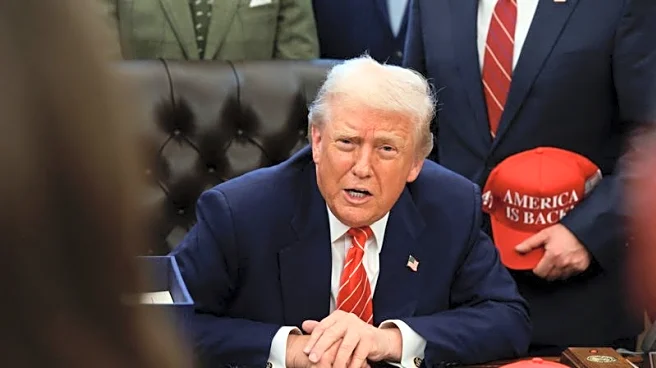
Swedish exports to the United States could decrease by up to 28% if President Trump implements additional tariffs on Swedish goods. This move comes after Sweden, along with other European countries, sent
military personnel to Greenland at Denmark's request. The proposed tariffs would start at 10% on February 1, increasing to 25% by June 1, unless a deal is reached for the U.S. to purchase Greenland. The Swedish Board of Trade estimates that current tariffs could already reduce exports by 6% over the next three to five years, with further tariffs exacerbating the decline. Key Swedish exports to the U.S. include motor vehicles, machinery, pharmaceuticals, and electronics.
Why It's Important?
The imposition of additional tariffs could significantly impact Sweden's economy, as the U.S. is its third-largest export market. Industries such as iron, steel, and electronics could face severe declines, with potential reductions of up to 50% in some sectors. This situation underscores the broader implications of international trade policies and geopolitical tensions on global markets. The tariffs could also affect U.S. consumers and businesses reliant on Swedish imports, potentially leading to higher prices and supply chain disruptions.
What's Next?
If the tariffs are implemented, Sweden and other affected countries may seek diplomatic negotiations to mitigate the impact. The situation could also prompt discussions within the European Union regarding collective responses to U.S. trade policies. Businesses in both Sweden and the U.S. will need to strategize to adapt to potential changes in trade dynamics and explore alternative markets or suppliers.