








What's Happening?
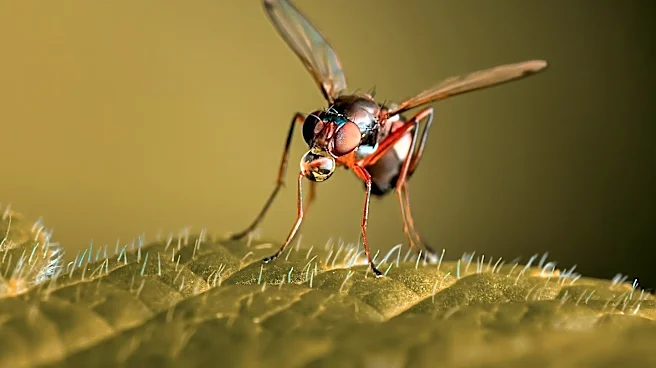
Texas Biomedical Research Institute has partnered with Flyttr to develop advanced biological solutions to combat the New World screwworm, a parasitic fly that poses a significant threat to livestock and wildlife in Texas. This pest, which was eradicated
from the U.S. in 1966, has re-emerged, with recent detections in Zavala County, Texas. The collaboration aims to utilize Texas Biomed's R&D facilities to create suppression technologies that could mitigate the economic impact, estimated by the USDA to be around $1.8 billion annually. The partnership reflects a commitment to addressing biosecurity threats through innovative scientific approaches.
Why It's Important?
The resurgence of the New World screwworm in Texas represents a major biosecurity and economic threat, potentially affecting the agricultural sector significantly. The partnership between Texas Biomed and Flyttr is crucial as it seeks to develop new methods to control and eliminate this pest, thereby protecting livestock and rural economies. The initiative highlights the importance of scientific innovation in addressing agricultural challenges and underscores the role of collaborative efforts in enhancing biosecurity measures. Successful suppression of the screwworm could prevent substantial economic losses and safeguard public health.
What's Next?
The partnership will focus on developing and testing new suppression technologies over the next two years. As these technologies are refined, they could be deployed more broadly to manage the screwworm threat. The collaboration may also lead to further partnerships and innovations in biosecurity, potentially influencing policy and funding decisions related to pest control and agricultural protection. Stakeholders, including federal and state agencies, will likely monitor the progress closely, as successful outcomes could serve as a model for addressing similar biosecurity threats in the future.