


What's Happening?
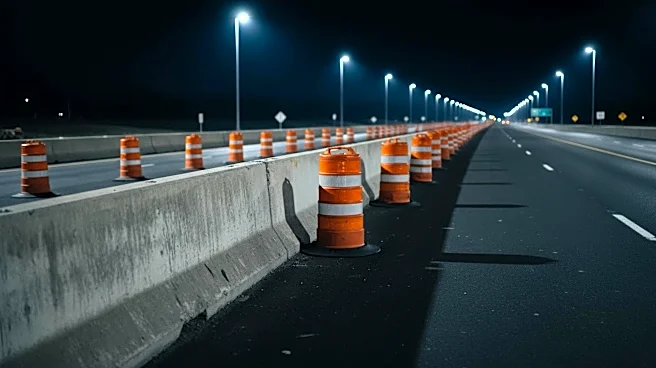
Chippewa County officials are leading an initiative to amend Wisconsin state law, seeking permission for counties statewide to implement an additional 0.5% sales tax. This proposed tax would be exclusively dedicated to the maintenance, rehabilitation,
and infrastructure projects for aging roads and bridges. Currently, Wisconsin law limits county-level sales taxes to 0.5% on top of the state's 5.0% rate. Local officials argue that this restriction, coupled with rising inflation and state-mandated levy limits, leaves local governments without adequate funds for critical public infrastructure. The Chippewa County Board of Supervisors passed a resolution in June, formally requesting the Wisconsin Counties Association (WCA) to lobby state lawmakers for this change during the upcoming legislative session.
Why It's Important?
This push by Chippewa County is significant for local governments across Wisconsin, as it addresses a critical funding gap for infrastructure. The current financial constraints, exacerbated by inflation and levy limits, hinder counties' ability to maintain essential public services like road and bridge repair. If approved, the additional sales tax would provide a dedicated revenue stream, allowing local communities to address deteriorating infrastructure, which is vital for economic activity, public safety, and quality of life. The proposal also highlights the tension between state-imposed financial restrictions and the increasing costs faced by local jurisdictions, potentially setting a precedent for greater local fiscal autonomy.
What's Next?
The Wisconsin Counties Association (WCA) is scheduled to vote on whether to adopt Chippewa County's proposal into its official state legislative advocacy agenda at its annual meeting in September. If the WCA endorses the proposal, it will then lobby state lawmakers for the necessary legislative changes. Should the state law be amended, individual counties would then have the option to implement the additional sales tax, though Chippewa County Administrator Andy Albarado noted that Chippewa County would likely only consider implementing the tax if neighboring counties widely adopted it to maintain local economic parity. The revenue generated would be split, with 50% retained by the county and the other half distributed to local towns, villages, and cities for their road repairs.
Beyond the Headlines
This initiative delves into the broader issue of fiscal federalism and the financial health of local governments in the U.S. The struggle of Wisconsin counties to fund infrastructure due to state-imposed limits and inflation reflects a common challenge faced by many local jurisdictions nationwide. It raises questions about the balance of power between state and local authorities regarding taxation and spending, and the long-term sustainability of public infrastructure funding models. The outcome of this proposal could influence how other states approach local government financing and infrastructure investment, potentially leading to more flexible or localized tax options to meet specific community needs.