



What's Happening?
The Lake Chad Basin Commission, the World Meteorological Organization (WMO), and Global Water Partnership Central Africa have initiated a five-year project aimed at transforming how five countries prepare for floods and droughts. The initiative, supported
by an Adaptation Fund grant of US$11,665,500, covers Cameroon, Niger, Nigeria, Chad, and the Central African Republic. The project's scope extends beyond improved forecasts, seeking to test the effectiveness of shared information, public institutions, and community preparedness in reducing avoidable losses. The WMO is identified as the implementing entity, with the Lake Chad Basin Commission and Global Water Partnership Central Africa serving as executing entities. This framework provides an institutional foundation, with its success dependent on operational coordination with national services.
Why It's Important?
This five-year project in the Lake Chad Basin is critically important for a region facing severe climate vulnerabilities and humanitarian challenges. For the U.S., supporting such initiatives aligns with its broader foreign policy goals of promoting stability, mitigating humanitarian crises, and fostering climate resilience in vulnerable regions. The project's success in improving early warning systems can prevent displacement, food insecurity, and conflict, which often have ripple effects on international security and aid efforts. By enhancing the capacity of these nations to manage climate risks, the initiative contributes to long-term stability and sustainable development, reducing the need for future interventions. It also serves as a test case for whether integrated approaches to climate adaptation, involving multiple stakeholders and cross-border cooperation, can deliver tangible protection for millions.
What's Next?
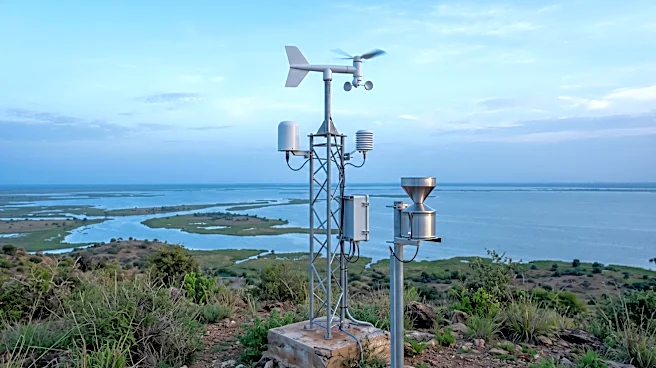
The immediate next steps for the project involve setting country-level implementation targets, establishing functioning data-sharing arrangements, conducting community warning trials, and securing long-term maintenance commitments. For policymakers, the success of this initiative will be measured by more informed and timely public decisions, while stakeholders will look for warnings that are understandable and actionable. The project will also need to address budgetary challenges, ensuring that the initial investment in monitoring infrastructure is matched by sustainable funding for ongoing operations and maintenance after the five-year period concludes. Evaluating the practical protection delivered by the investment will be essential to determine its overall effectiveness and potential for replication in other vulnerable regions.
Beyond the Headlines
The Lake Chad Basin project highlights the complex interplay between climate change, governance, and humanitarian concerns. While improved forecasts are a technical solution, the real challenge lies in the 'last mile' of warning dissemination and ensuring that vulnerable communities have the means to respond. The project's emphasis on community emergency planning, training, and attention to women, young people, and vulnerable residents is crucial for addressing inclusion questions and ensuring that warnings reach those most at risk. This initiative also implicitly addresses the need for transparent rules and institutions to manage competing water needs, as forecasts alone cannot resolve resource allocation disputes. The success of this project will not only depend on scientific advancements but also on effective governance, community engagement, and equitable resource distribution.