

What's Happening?
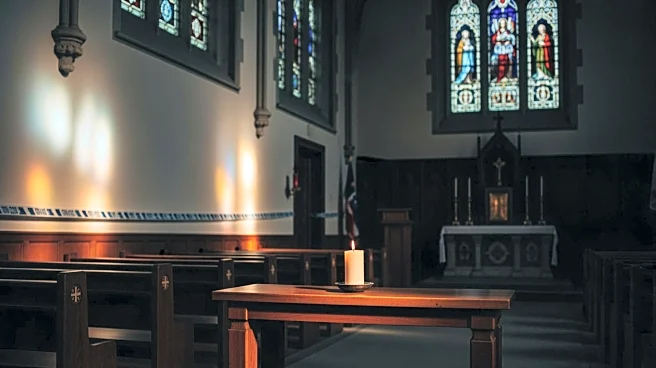
Bishop Rob Hirschfeld of New Hampshire has issued a stark warning to his clergy, urging them to prepare for a 'new era of martyrdom' in response to recent events involving Immigration and Customs Enforcement (ICE). This comes after the fatal shooting
of Renee Macklin Good by an ICE agent in Minneapolis, which has sparked nationwide protests. Hirschfeld, speaking at a vigil in Concord, New Hampshire, highlighted the 'cruelty, injustice, and horror' of the incident and advised clergy to get their affairs in order, suggesting that the time for statements has passed and that physical presence may be necessary to protect the vulnerable. His comments have drawn both praise and criticism, with some viewing it as a call to action and others as potentially escalating tensions.
Why It's Important?
The bishop's comments underscore the growing tension between faith communities and federal immigration enforcement, reflecting broader national debates on immigration policy and enforcement practices. This situation highlights the role of religious leaders in social justice movements and their influence in mobilizing communities. The potential for increased confrontations between protesters and law enforcement could lead to heightened scrutiny of ICE practices and policies, impacting public opinion and possibly influencing future legislative actions. The bishop's call to action may galvanize further protests and civil disobedience, affecting local and national political landscapes.
What's Next?
As protests continue, there may be increased pressure on lawmakers to address concerns about ICE's enforcement tactics. Religious and community leaders might intensify their advocacy efforts, potentially leading to more organized demonstrations and calls for policy reform. The response from federal and local authorities will be crucial in determining the trajectory of these protests. Additionally, the dialogue between religious groups and government agencies could evolve, possibly leading to new partnerships or further divisions.
Beyond the Headlines
The bishop's remarks also raise questions about the ethical responsibilities of religious leaders in political and social issues. This situation may prompt discussions about the separation of church and state, the role of faith in public life, and the moral obligations of religious institutions in advocating for marginalized communities. The potential for increased activism among faith groups could lead to long-term shifts in how religious organizations engage with social justice issues.