







What's Happening?
Oil prices have fallen to a three-week low following announcements from U.S. officials about potential progress in negotiations with Iran to reopen the Strait of Hormuz. U.S. Secretary of State Marco Rubio and Treasury Secretary Scott Bessent indicated
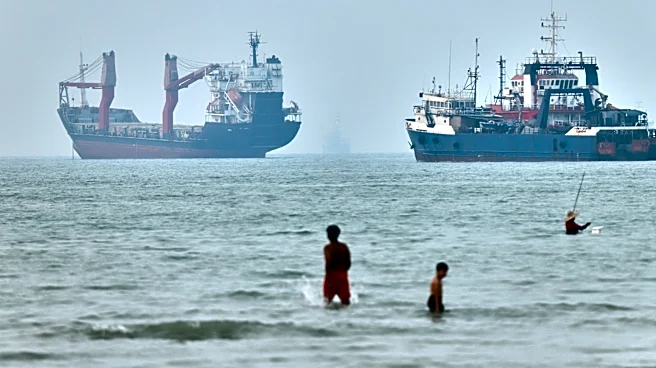
that talks have advanced, potentially allowing shipments to resume soon. The price of Brent crude, a global oil benchmark, decreased by nearly 5% to under $80 per barrel. Similarly, U.S. West Texas Intermediate prices dropped by more than 5% to $76 per barrel. The discussions involve Iran and Oman, with hopes for a deal to be reached imminently. Despite these developments, Iran has stated it is not negotiating directly with the U.S. but is in talks with Oman. The Strait of Hormuz is a critical passage for global oil and liquefied natural gas supplies, and its closure has significantly impacted the oil market.
Why It's Important?
The potential reopening of the Strait of Hormuz is significant for global oil markets and the U.S. economy. The strait is a vital channel for about one-fifth of the world's oil supply. Its closure has contributed to volatile oil prices, affecting fuel costs for consumers and businesses. A resolution could stabilize oil prices, benefiting industries reliant on oil and reducing costs for consumers. However, the ongoing conflict and previous negotiation failures highlight the fragility of the situation. The outcome of these talks could influence geopolitical relations in the Middle East and impact U.S. foreign policy and economic interests.
What's Next?
If a deal is reached, it could lead to the resumption of oil shipments through the Strait of Hormuz, potentially stabilizing oil prices. However, the situation remains uncertain, with Iran not engaging in direct talks with the U.S. and ongoing regional tensions. The U.S. and its allies may continue diplomatic efforts to ensure the security of oil shipments and address broader geopolitical issues. The outcome of these negotiations could have lasting implications for international relations and energy markets.