
What's Happening?
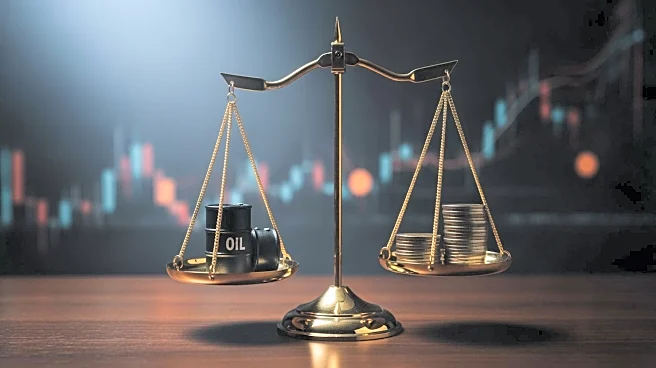
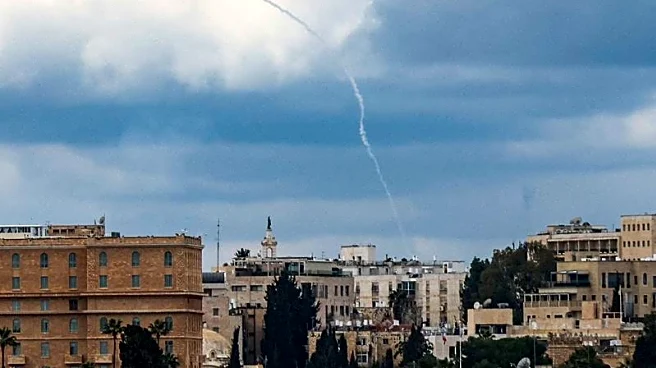
The U.S. economy is facing new challenges following President Trump's decision to initiate military actions against Iran, aiming to destabilize its long-standing government. This has led to increased geopolitical tensions, with oil prices surging from
$70 to nearly $80 a barrel. The conflict has disrupted shipping through the Strait of Hormuz, a critical oil passageway, raising concerns about global trade and investment. Analysts are closely monitoring the situation, as the U.S. economy, previously showing signs of growth, now faces potential setbacks. A recent survey by the Conference Board indicated that while CEO confidence in the U.S. economy was high, 60% of respondents viewed geopolitical tensions as a significant risk. The International Monetary Fund had described the U.S. economic outlook as 'buoyant,' but this assessment is now under threat due to the unpredictable nature of the conflict.
Why It's Important?
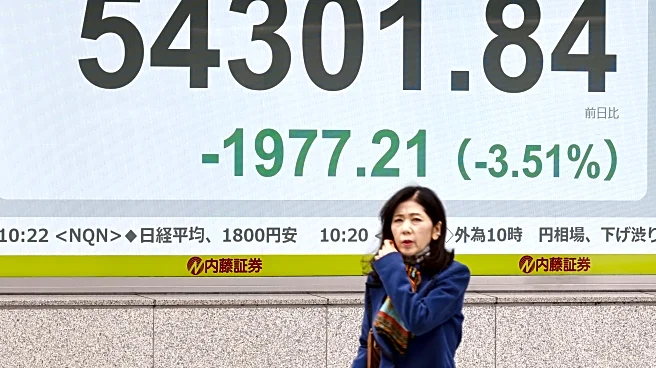
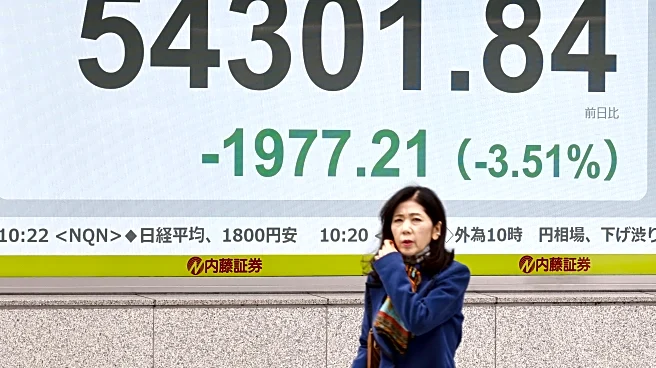
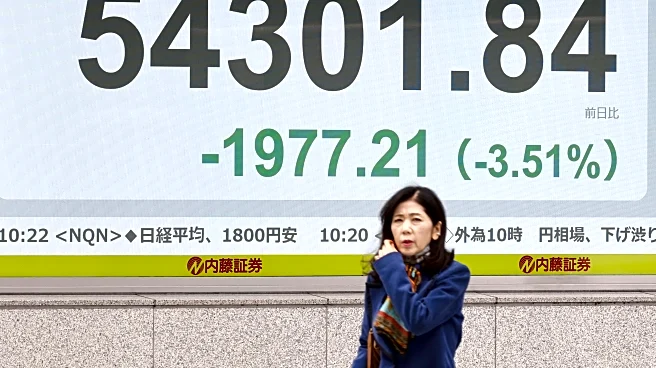
The conflict with Iran could have far-reaching implications for the U.S. economy, particularly in terms of energy prices and inflation. The Federal Reserve's monetary policy may be influenced by these developments, as higher oil prices could lead to increased inflationary pressures. The situation also poses risks to global supply chains and trade routes, potentially affecting U.S. economic growth and labor markets. The uncertainty surrounding the conflict could lead to volatility in financial markets, impacting investor confidence and economic stability. The potential for a prolonged conflict raises concerns about the U.S.'s ability to maintain its economic resilience in the face of external shocks.
What's Next?
The future of the conflict remains uncertain, with potential scenarios ranging from a quick resolution to a prolonged asymmetric campaign involving cyber activities and regional instability. The Federal Reserve may need to adjust its policy stance depending on the conflict's impact on global oil prices and economic conditions. The U.S. government and businesses will likely continue to monitor the situation closely, preparing for various outcomes that could affect economic and geopolitical stability.