






What's Happening?
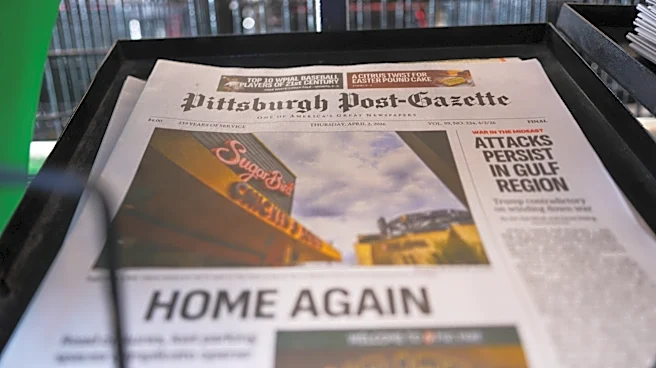
The Pittsburgh Post-Gazette, a historic newspaper with roots dating back to 1786, has been saved from closure by a last-minute acquisition by the Venetoulis Institute for Local Journalism. The nonprofit organization, known for publishing the digital Baltimore
Banner, has agreed to purchase the assets of the Post-Gazette from its current owners, Block Communications. This acquisition comes just weeks before the newspaper was scheduled to shut down on May 3, 2026. The Venetoulis Institute plans to continue the publication of the newspaper on Thursdays and Sundays, while maintaining a digital presence on other days. The financial details of the transaction have not been disclosed. The move is seen as a significant step in preserving local journalism in Pittsburgh, which would have become the largest U.S. city without a city-based newspaper had the Post-Gazette closed.
Why It's Important?
The acquisition of the Pittsburgh Post-Gazette by the Venetoulis Institute is crucial for the preservation of local journalism in Pittsburgh, a city with a rich history of news reporting. The closure of the Post-Gazette would have left a significant void in local news coverage, impacting the community's access to information and civic engagement. This development highlights the ongoing challenges faced by the newspaper industry, which has been struggling with declining revenues and job cuts due to the digital transformation of media consumption. The Venetoulis Institute's commitment to maintaining the Post-Gazette's operations underscores the importance of nonprofit models in sustaining local journalism. This move could serve as a model for other struggling newspapers across the country, demonstrating the potential of nonprofit ownership in preserving local news outlets.
What's Next?
The Venetoulis Institute plans to work closely with local journalists, civic leaders, and business stakeholders to build a sustainable future for the Pittsburgh Post-Gazette. The institute has appointed David Shribman, a former executive editor of the Post-Gazette, to its board of directors, indicating a commitment to experienced leadership. The focus will likely be on stabilizing the newspaper's operations and exploring innovative revenue models to ensure its long-term viability. The institute's experience with the Baltimore Banner, which has successfully grown its subscriber base, may provide valuable insights into expanding the Post-Gazette's digital presence and audience engagement. The broader media industry will be watching closely to see if this nonprofit approach can be replicated in other markets facing similar challenges.
Beyond the Headlines
The acquisition of the Pittsburgh Post-Gazette by a nonprofit organization raises important questions about the future of journalism in the digital age. As traditional revenue models continue to falter, the role of nonprofit entities in supporting local news becomes increasingly significant. This development may prompt discussions about the ethical and operational implications of nonprofit ownership, including issues of editorial independence and financial sustainability. Additionally, the involvement of civic and business leaders in the newspaper's future could lead to new forms of community engagement and collaboration. The success of this model could inspire similar initiatives in other regions, potentially reshaping the landscape of local journalism in the United States.