
What's Happening?
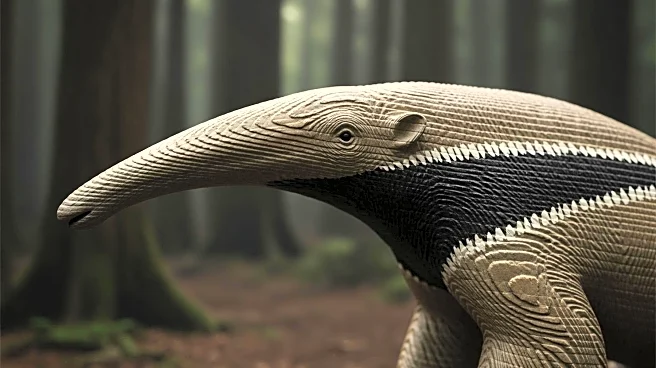
Recent research has uncovered that mammals have evolved into anteaters, adopting a diet exclusively of ants and termites, at least 12 times over the past 66 million years. This dietary shift, known as myrmecophagy,
occurred after the extinction of dinosaurs, which allowed ants and termites to proliferate and create a new food niche for mammals. The study, published in the journal Evolution, highlights that out of the twelve evolutionary instances, only one species survived each time, indicating the vulnerability of highly specialized creatures to environmental changes. The research involved analyzing dietary data from 4,099 mammal species, revealing that while over 200 species consume ants or termites occasionally, only about 20 species, such as pangolins and anteaters, rely on them entirely.
Why It's Important?
The findings underscore the significant impact that ants and termites have had on mammalian evolution, acting as a powerful selective force over millions of years. This research provides insights into how specialized diets can drive evolutionary changes in anatomy and behavior. However, it also highlights the risks associated with such specialization, as these creatures may face extinction due to environmental changes or food scarcity. Understanding these evolutionary patterns is crucial for conservation efforts, as it can inform strategies to protect species that are highly specialized and therefore more vulnerable to ecological disruptions.