








What's Happening?
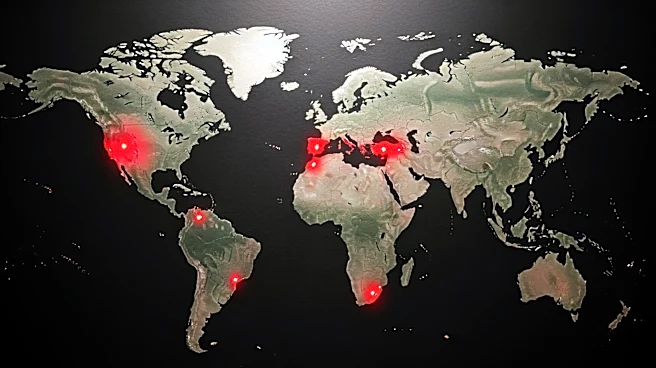
A new global model has identified approximately 9.3% of the world's land area as highly vulnerable to disease outbreaks, with hotspots concentrated in Latin America and Oceania. The research, led by Angela Fanelli from the European Commission’s Joint
Research Centre, uses machine learning and satellite data to map epidemic-prone diseases. The study highlights the role of human-driven environmental changes in shaping epidemic risks and the strain on countries' response capabilities. The model shows that zoonotic diseases, which transfer from animals to humans, are a significant concern, with climate change further exacerbating the risk by altering habitats and migration patterns.
Why It's Important?
The findings of this study are crucial for global health preparedness, as they highlight regions where health systems may be overwhelmed by outbreaks. The model serves as a tool for identifying areas that require enhanced surveillance and resource allocation to prevent and manage potential epidemics. By understanding the environmental and socio-economic factors contributing to disease spread, policymakers can develop targeted strategies to mitigate risks. This proactive approach is essential for preventing widespread health crises and ensuring global health security.
What's Next?
The study suggests that countries identified as high-risk but with limited health infrastructure need international support to bolster their epidemic response capabilities. This includes improving early detection systems, communication strategies, and vaccine access. Global cooperation in surveillance and resource sharing will be vital in addressing these vulnerabilities. The research also calls for continuous monitoring and updating of disease risk maps to adapt to changing environmental and socio-economic conditions.