



What's Happening?
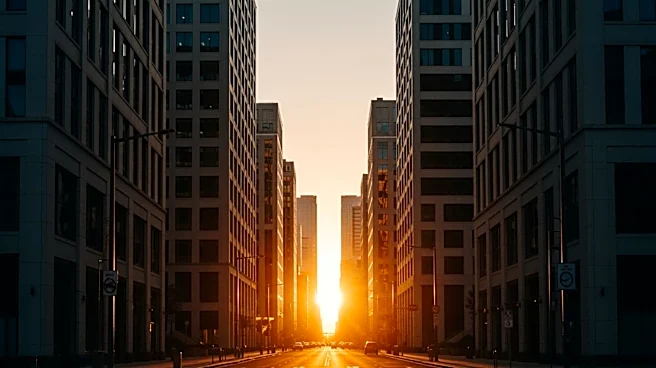
In 1811, the planners of Manhattan's street grid inadvertently created a phenomenon known as Manhattanhenge, where the setting sun aligns perfectly with the city's east-west streets four times a year. This alignment creates a striking visual effect as the sun casts
a golden corridor of light through the urban canyons of midtown Manhattan. The grid was originally designed for real estate purposes, not astronomical alignment, but the result is a visually compelling event. The term 'Manhattanhenge' was coined by Neil deGrasse Tyson, director of the Hayden Planetarium, who first documented the phenomenon in 2002. The alignment occurs because the grid is rotated about 29 degrees east of true north, causing the sun to align with the streets on specific dates in late spring and mid-summer.
Why It's Important?
Manhattanhenge has become a cultural event in New York City, attracting photographers and tourists who gather to capture the unique alignment. It highlights the intersection of urban planning and natural phenomena, offering a moment where the city's infrastructure and the cosmos align. This event underscores the unintended consequences of urban design and how they can lead to unexpected cultural and visual experiences. The phenomenon also serves as a reminder of the importance of considering natural elements in city planning, even if unintentionally, and how such alignments can enhance the cultural fabric of a city.
What's Next?
The dates for Manhattanhenge are calculated annually by the Hayden Planetarium, with the next occurrences expected in late May and mid-July. As the event gains popularity, it is likely to continue drawing crowds and media attention. The phenomenon also prompts discussions about urban design and its impact on cultural experiences. Future urban planning efforts might consider the potential for similar alignments in other cities, leveraging natural phenomena to create unique cultural events. Additionally, the event may inspire further exploration of the relationship between urban environments and astronomical events.
Beyond the Headlines
Manhattanhenge raises questions about the role of chance in urban design and the potential for cities to create cultural phenomena through their infrastructure. It also highlights the importance of public spaces and how they can be used to engage communities with natural events. The phenomenon encourages a broader appreciation for the ways in which urban environments can interact with natural elements, fostering a sense of wonder and connection to the cosmos. As cities continue to grow and evolve, the integration of natural phenomena into urban experiences could become a more deliberate aspect of city planning.