



What's Happening?
President Trump has issued a tariff ultimatum against eight European nations, linking transatlantic trade relations to the acquisition of Greenland. This move has caused significant market turmoil, with the Dow Jones Industrial Average dropping over 870
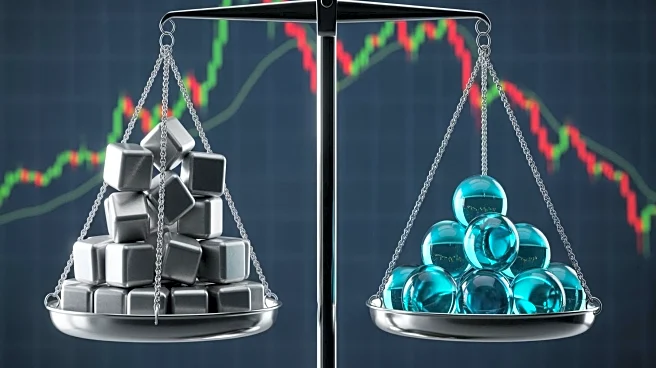
points and gold prices surging past $4,700 per ounce. The tariffs are part of a broader strategy to secure Greenland's Rare Earth Elements and counter Russian and Chinese military expansion in the Arctic. The situation has led to concerns about a fractured NATO alliance and a multi-front trade war.
Why It's Important?
The Greenland tariff threat represents a shift in global trade dynamics, challenging traditional norms of sovereignty within NATO. The move fits into a trend of 'resource nationalism,' prioritizing access to critical minerals over diplomatic protocols. The potential ripple effects include European retaliatory tariffs and long-term 'de-risking' strategies, which could lead to a more bifurcated global economy. The situation highlights the systemic risk introduced by using trade as a tool for territorial gain, impacting global financial stability.
What's Next?
The February 1 implementation of the 10% tariff is viewed as inevitable, with the real question being whether a diplomatic solution can be found before the June 1 escalation. U.S. importers are reportedly front-loading shipments to build inventories before the tariffs hike. Market opportunities may arise in domestic industries competing with European imports, but inflationary pressures could offset these gains. The scenario of gold reaching $5,000 per ounce could become a reality if the trade war continues to escalate.
Beyond the Headlines
The Greenland crisis raises questions about the long-term impact on the NATO alliance and global supply chains. The regulatory implications are profound, with the Danish government reiterating that Greenland is not for sale. This sets the stage for a legal battle within the World Trade Organization. The situation echoes historical territorial acquisitions but in a modern era where Greenlandic people possess self-governance and oppose a change of administration.