







What's Happening?
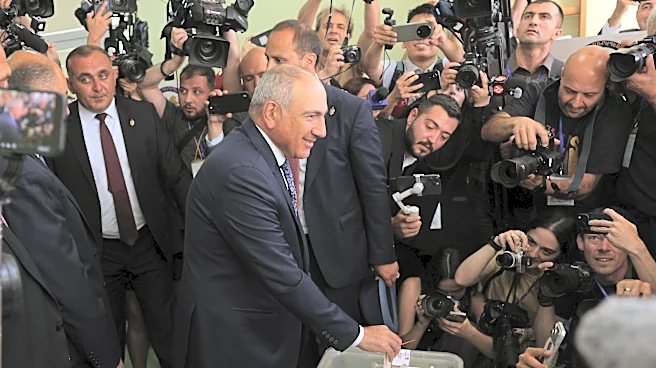
Armenian Prime Minister Nikol Pashinyan has claimed victory in a general election that was widely viewed as a test of Russia's influence in the region. Preliminary results indicate that Pashinyan's Civil Contract party secured 49.82% of the vote, significantly
ahead of the runner-up, the Strong Armenia bloc, which garnered 23.28%. The election was marked by accusations of Russian interference and vote-buying allegations against the opposition. Pashinyan aims to steer Armenia towards closer ties with the European Union, distancing the country from Moscow's influence.
Why It's Important?
This election result is pivotal for Armenia's geopolitical orientation, as it reflects a potential shift away from Russian influence towards stronger ties with the West. Pashinyan's victory could lead to significant changes in Armenia's foreign policy, impacting regional stability and economic relations. The outcome also underscores the challenges faced by Russia in maintaining its influence over former Soviet states, as countries like Armenia explore alternative alliances. This shift could have broader implications for the balance of power in the South Caucasus region.
What's Next?
Following the election, Pashinyan is expected to continue pursuing policies that strengthen Armenia's ties with the European Union. This may involve further democratic reforms and economic cooperation initiatives. However, Armenia will need to navigate potential economic repercussions from Russia, which has already imposed import bans on certain Armenian products. The government will also focus on domestic issues, such as border demarcation with Azerbaijan and anti-corruption measures. The international community, particularly the EU, is likely to support Armenia's efforts to solidify its democratic institutions and economic independence.