


What's Happening?
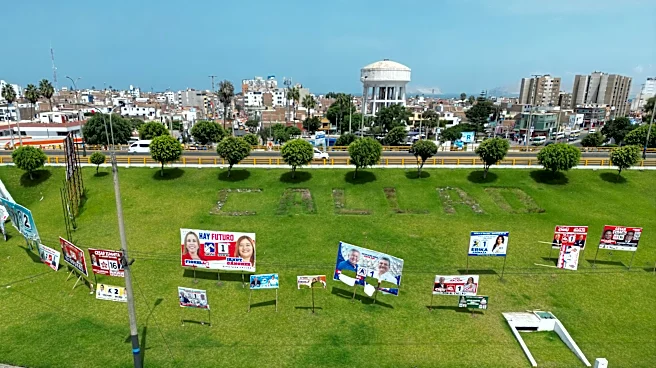
Peru is preparing for a presidential election with an unprecedented 35 candidates vying for the position. The election, scheduled for Sunday, comes at a time of heightened crime and corruption, which has led to widespread voter dissatisfaction. Among
the candidates are a former minister, a comedian, and a political heiress. The election is taking place against a backdrop of increased violent crime, with homicides doubling and extortion cases rising fivefold over the past decade. Voting is mandatory for Peruvians aged 18 to 70, with over 27 million registered voters. A candidate must secure more than 50% of the votes to win outright, but a runoff in June is likely due to the divided electorate. Key candidates include Keiko Fujimori, who is making her fourth presidential bid, and Rafael López Aliaga, a former mayor of Lima. Both have proposed tough measures to combat crime.
Why It's Important?
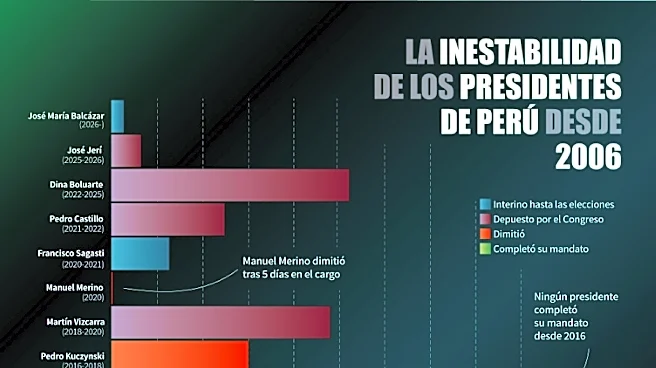
The election is significant as it reflects the deep-seated issues of crime and corruption that have plagued Peru, affecting public trust in political leaders. The outcome could influence the country's approach to law enforcement and judicial reforms. The introduction of a bicameral Congress, which will be elected alongside the president, marks a major shift in Peru's legislative structure. This new system could alter the balance of power, making it easier to impeach a president, which has been a frequent occurrence in recent years. The election results will have implications for Peru's political stability and governance, potentially affecting foreign relations and economic policies.
What's Next?
Following the election, if no candidate wins a majority, a runoff will be held in June. The newly elected president and Congress will face the challenge of addressing the crime wave and restoring public confidence in the government. The bicameral Congress will have significant power, including the ability to appoint and sanction high-ranking officials. This could lead to changes in how Peru addresses corruption and governance issues. The international community will be watching closely, as Peru's political stability is crucial for regional security and economic partnerships.