
What's Happening?
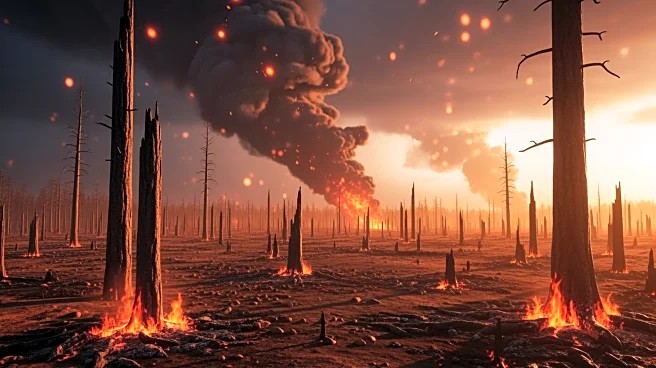
Recent wildfires in California, including the Eaton and Palisades fires, have been exacerbated by a combination of climate change and extreme weather conditions. These fires, which destroyed over 16,000
structures and resulted in 31 fatalities, are among the most destructive in the state's history. Scientists attribute the increased frequency and intensity of these fires to global warming, which has led to hotter summers and drier conditions. A study from 2023 highlighted that summer forest fires in California have burned five times more area between 1996 and 2021 compared to the previous 25 years. The fires were further fueled by a sequence of intense rains followed by unprecedented heat and dry conditions, creating a 'hydroclimate whiplash' that increased fire risk by promoting the growth of flammable vegetation.
Why It's Important?
The intensification of wildfires in California has significant implications for public safety, environmental health, and economic stability. As climate change continues to exacerbate fire conditions, the state faces increased risks of property damage, loss of life, and economic disruption. The fires also contribute to air pollution and greenhouse gas emissions, further impacting climate change. The situation underscores the urgent need for comprehensive climate policies and improved fire management strategies to mitigate future risks. Additionally, the fires highlight the challenges of urban development in fire-prone areas and the need for better infrastructure and emergency response systems.
What's Next?
In response to the growing threat of wildfires, California may need to implement stricter building codes, enhance fire prevention measures, and invest in climate resilience infrastructure. Policymakers and scientists are likely to focus on developing strategies to manage the 'hydroclimate whiplash' and other climate-related phenomena. There may also be increased pressure on the state and federal governments to address climate change more aggressively and to support communities affected by wildfires. The role of aging infrastructure and human activities in fire ignition will likely be scrutinized, leading to potential regulatory changes.