








What's Happening?
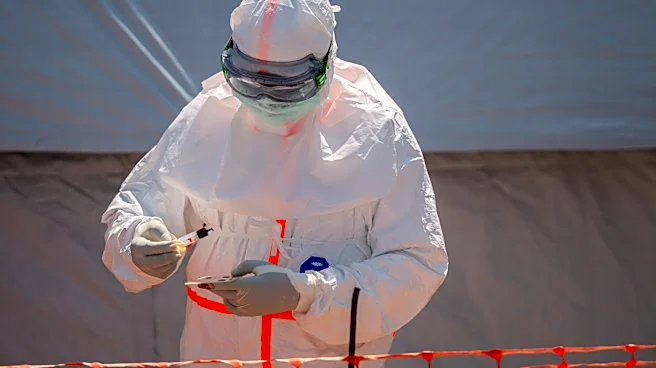
A U.S. citizen working in the Democratic Republic of Congo (DRC) has contracted Ebola, becoming the second American to be infected during the current outbreak. This individual, who was employed by the evangelical Christian organization Samaritan’s Purse,
was not involved in direct patient care, raising questions about the transmission of the virus. The outbreak, which began on May 15, is the third largest on record, with 1,926 cases and 702 deaths reported as of July 12. The U.S. government, under President Trump, has adopted a policy of not repatriating citizens exposed to or infected with Ebola, despite having facilities capable of treating such cases. Instead, the infected American has been sent to Germany for medical care. The World Health Organization (WHO) is actively involved in managing the outbreak, with its Director-General, Tedros Adhanom Ghebreyesus, calling for increased international cooperation to control the virus's spread.
Why It's Important?
The U.S. policy of not repatriating Ebola-infected citizens highlights a significant shift in the country's approach to international health crises. This decision could have implications for the U.S.'s role in global health leadership and its relationships with international health organizations like the WHO. The policy may also affect the morale and safety of American aid workers abroad, potentially discouraging participation in international humanitarian efforts. Furthermore, the decision to send infected citizens to Germany for treatment underscores the reliance on international partners for managing health emergencies, which could influence future diplomatic and health policy decisions.
What's Next?
The ongoing Ebola outbreak in the DRC is expected to require continued international collaboration to bring it under control. The WHO and other international partners are likely to intensify their efforts, potentially leading to increased pressure on the U.S. to reconsider its current policy. The situation may prompt discussions within the U.S. government about the balance between national security concerns and global health responsibilities. Additionally, the effectiveness of the current response strategies will be closely monitored, with potential adjustments made to improve outbreak management and support for affected regions.