
What's Happening?
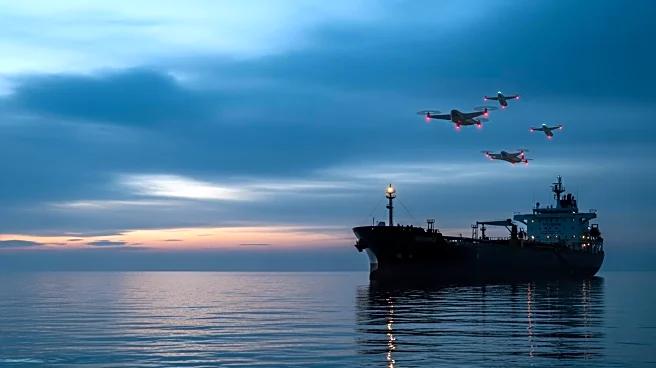
Three Greek-managed oil tankers were struck by unidentified drones in the Black Sea while en route to load crude oil at a terminal on Russia's coast. The incident occurred on January 13, 2026, and involved
two Suezmax tankers and one Aframax tanker. These vessels were heading to the Yuzhnaya Ozereyevka terminal, a critical loading point for Kazakh crude oil. The attacks come amid a significant drop in Kazakhstan's oil production, which has been constrained by export limitations through the Black Sea terminal. The Caspian Pipeline Consortium, which operates the terminal, has not commented on the attacks. The tankers suffered minor damage, and no injuries were reported. The incident has raised concerns about the security of oil transportation in the region.
Why It's Important?
The attacks on the oil tankers could have significant implications for global oil markets, particularly in terms of shipping and insurance costs. The Black Sea is a vital route for oil exports, handling over 2% of global crude. Disruptions in this area could lead to increased costs for companies seeking to load oil at Russian terminals. The incident also highlights the vulnerability of maritime routes to drone attacks, which could prompt a reevaluation of security measures in the region. The involvement of Greek-managed tankers underscores the international nature of the shipping industry and the potential for geopolitical tensions to impact global trade.
What's Next?
In response to the attacks, there may be increased security measures implemented for oil tankers operating in the Black Sea. Shipping companies and insurance providers might reassess their risk assessments and pricing models. Additionally, there could be diplomatic discussions between the countries involved to address the security concerns and prevent future incidents. The situation may also prompt a broader examination of the use of drones in maritime security and the need for international regulations to address such threats.