

What's Happening?
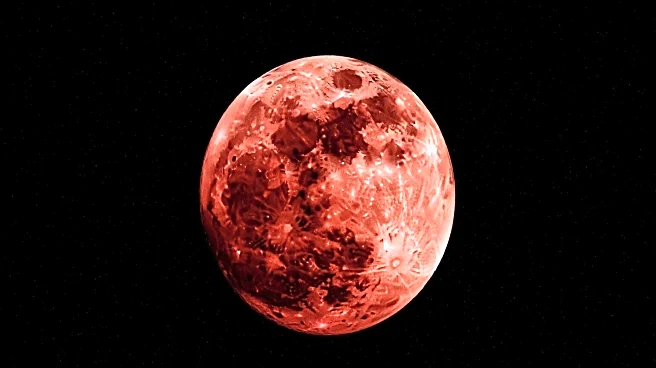
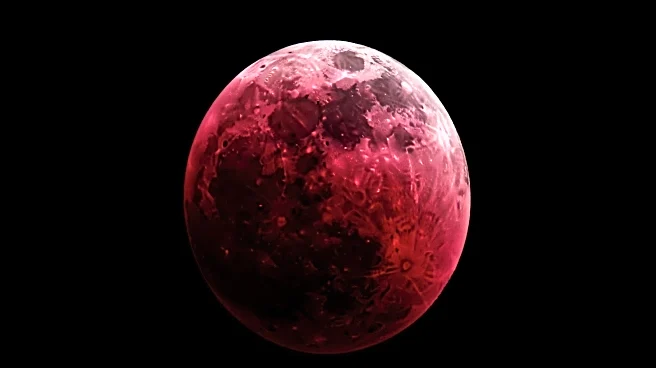
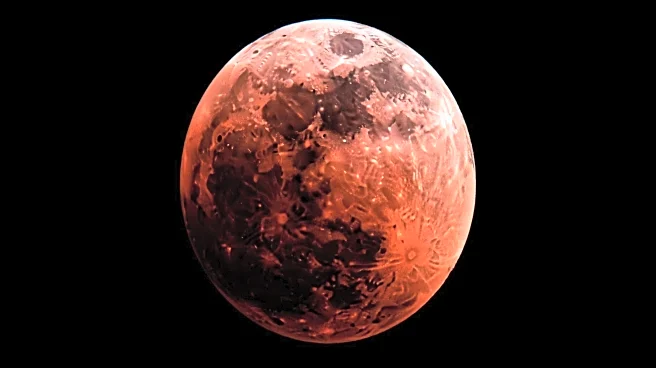
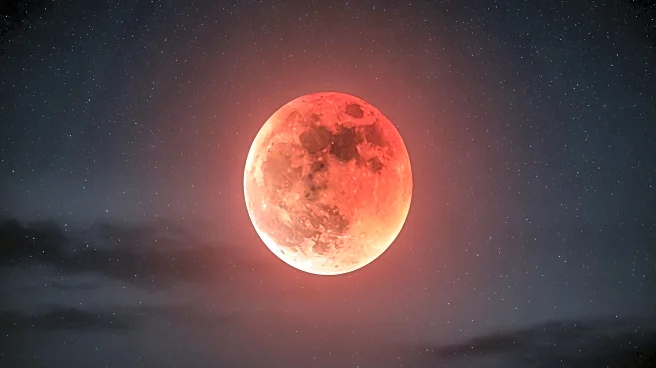
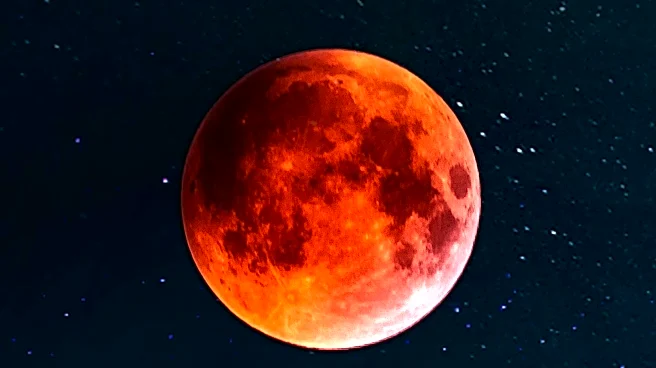
On March 3, 2026, a rare total lunar eclipse, known as a 'blood moon,' will occur, visible across the Americas, the Pacific, Australia, and Asia. During this event, the full moon will pass into Earth's shadow, taking on a reddish hue due to sunlight filtering
through Earth's atmosphere. This eclipse is notable for its rarity, as it will be the last total lunar eclipse visible until New Year's Eve 2028-2029. The eclipse will last for 5 hours and 39 minutes, with totality lasting 58 minutes. The event offers a unique opportunity for skywatchers to witness a celestial spectacle.
Why It's Important?
The total lunar eclipse provides a rare opportunity for skywatchers to observe a dramatic celestial event. The 'blood moon' effect is caused by Earth's atmosphere filtering sunlight, highlighting the interconnectedness of celestial bodies. This event provides an educational moment for the public to learn about lunar phases, eclipses, and the dynamics of the Earth-Moon-Sun system. It also serves as a reminder of the natural cycles that govern our planet and the universe. The rarity of this eclipse adds to its significance, as it will be the last total lunar eclipse visible for several years.
What's Next?
Following the eclipse, the Moon will continue its cycle, with the next significant lunar event being the new moon. Observatories and educational institutions may host events to facilitate public viewing and understanding of the eclipse. The visibility of the eclipse will depend on local weather conditions, so skywatchers are advised to check forecasts. This event may inspire further interest in astronomy and related sciences, encouraging more people to explore the wonders of the universe. The next total lunar eclipse visible from the U.S. will not occur until 2028, making this event particularly noteworthy.