





What's Happening?
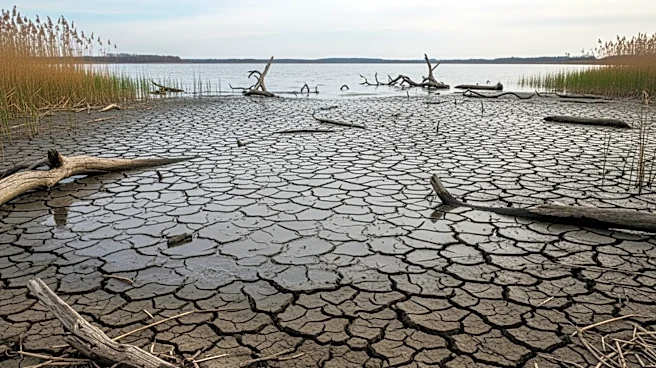
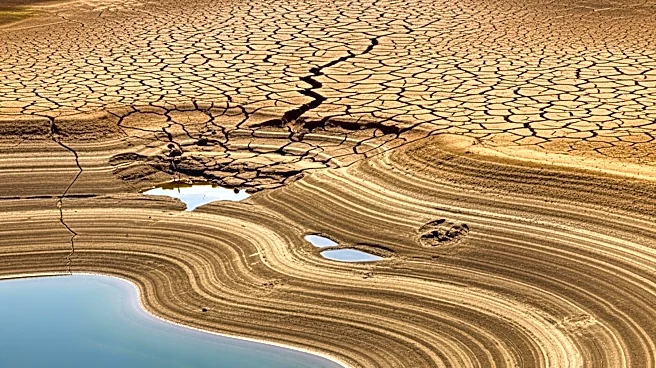
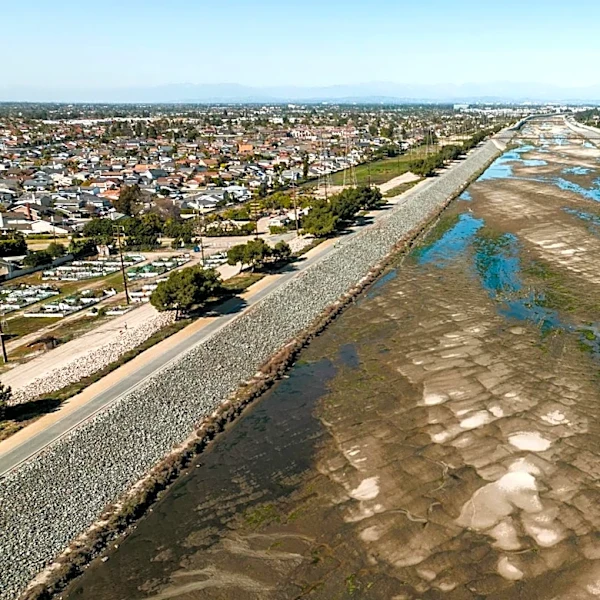
Six major U.S. reservoirs have reached their lowest levels in at least three decades for this time of year, according to federal data. The Bureau of Reclamation's reservoir storage dashboard, which tracks water levels at over 50 major sites, indicates
that these reservoirs are experiencing significant strain due to persistent drought conditions. Notably, Lake Mead and Lake Powell, the two largest reservoirs in the Colorado River Basin, are under severe pressure, with Lake Mead at 49.2% and Lake Powell at 38.5% of their typical levels. The situation is exacerbated by a low snowpack season, which has resulted in reduced water flow into these reservoirs. The drought is affecting large portions of the West, Plains, South, and Southeast, leading to concerns about water shortages and increased energy demand.
Why It's Important?
The declining water levels in these reservoirs have significant implications for water supply and energy production in the U.S. The Colorado River Basin, which includes Lake Mead and Lake Powell, is a critical water source for over 40 million people and supports a vast hydropower network. Continued declines in water levels could lead to water shortages, impacting agriculture and increasing energy costs. The drought has already caused billions of dollars in damages across the U.S., highlighting the economic and social stakes involved. As the drought persists, regions are entering the summer with depleted water supplies, raising the risk of further shortages and agricultural strain.
What's Next?
If dry conditions continue, federal projections warn that Lake Mead and Lake Powell could approach or fall below their historical minimum levels. This would exacerbate water access issues and potentially disrupt energy production. Water managers are preparing for reduced water deliveries, which could impact agricultural operations and urban water supplies. Conservation efforts and smart water usage will be crucial in mitigating the effects of the drought. Stakeholders, including government agencies and local communities, will need to collaborate on strategies to manage water resources effectively.