
What's Happening?
The Thwaites Glacier, often referred to as the 'Doomsday Glacier,' is showing signs of accelerated retreat, raising concerns about its potential impact on global sea levels. A study by the International
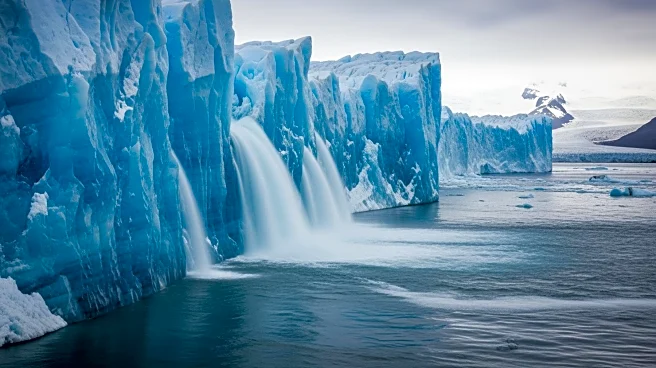
Thwaites Glacier Collaboration (ITGC) highlights the growing cracks in the glacier's ice shelf, which are compromising its structural integrity. Researchers from the University of Manitoba have analyzed satellite data from 2002 to 2022, observing significant fracturing around a shear zone. If the glacier collapses, it could trigger up to 11 feet of global sea level rise, threatening coastal communities worldwide. The study also notes the role of warming ocean waters in melting the glacier's ice shelves, creating a feedback loop that exacerbates the situation.
Why It's Important?
The potential collapse of the Thwaites Glacier poses a significant threat to global sea levels, with the potential to displace tens of millions of people living in coastal areas. The glacier's retreat is a stark indicator of the broader impacts of climate change, highlighting the urgent need for climate change mitigation efforts. The study underscores the importance of understanding the dynamics of ice shelf melting and the interactions between ocean waters and glaciers. Addressing these challenges is crucial for developing strategies to mitigate the effects of rising sea levels and protect vulnerable communities.
What's Next?
Scientists are continuing to study the Thwaites Glacier to better understand the mechanisms driving its retreat and the potential timeline for its collapse. The ITGC's report suggests that while a full collapse is unlikely in the immediate future, the glacier is set to retreat further and faster in the coming decades. Immediate and sustained climate change mitigation efforts, such as decarbonization, are recommended to delay ice loss and prevent similar unstable retreats in other regions. Ongoing research will focus on monitoring the glacier's behavior and developing predictive models to inform global climate policy.