





What's Happening?
BAE Systems has been awarded a five-year, $65.7 million indefinite delivery, indefinite quantity (IDIQ) contract by the U.S. Navy. This contract tasks BAE Systems with providing sustainment and engineering services for air traffic control (ATC) platforms.
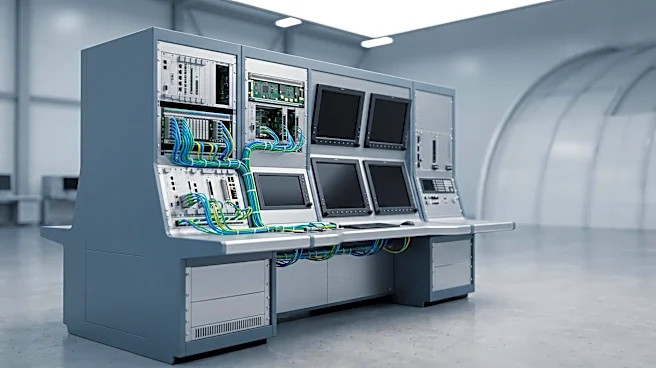
The company will leverage its engineering, technical, and operational expertise to develop, produce, equip, test, evaluate, sustain, and update critical expeditionary ATC aviation systems. These services will support the Naval Air Warfare Center Aircraft Division’s (NAWCAD) Webster Outlying Field (WOLF). The contract builds on over a decade of BAE Systems' involvement in key systems such as the Standard Terminal Automation Replacement System (STARS), Air Traffic Navigation, Integration, and Coordination System (ATNAVICS), Airfield Mobile Tactical Air Navigation System (AMTAC), and ATNAVICS Data Link System (ADLS). BAE Systems will also be responsible for developing and maintaining operational software, supporting test beds, field change programs, and supplies for these ATC systems.
Why It's Important?
This contract is crucial for maintaining the operational readiness and safety of U.S. Navy and Marine Corps aviation. By ensuring the sustainment and modernization of expeditionary air traffic control systems, BAE Systems directly contributes to the capability of forces to establish airfields rapidly in diverse environments. This is particularly vital for operations in new or challenging terrains where existing military base infrastructure is absent. The continuous development and improvement of real-time ATC computer systems, along with hardware reliability and precise installation, enhance platform flight safety for end users. The contract also highlights the ongoing reliance of the U.S. military on private sector expertise for critical defense infrastructure, ensuring that advanced technological solutions are integrated and maintained for national security purposes.
What's Next?
Over the next five years, BAE Systems will continue its work on upgrading radar systems, installing software, fixing hardware, and certifying both tactical and shore-based ATC systems. The company's radar technicians will deploy globally to support warfighters, aiming for quicker turnover to end users, improved hardware reliability, and more accurate field installations and precision. This sustained effort will ensure that the U.S. Navy's airfield systems remain reliable and precise, directly impacting the safety and efficiency of military air operations. The contract also positions BAE Systems as a key partner in the ongoing technological evolution of military air traffic control, potentially leading to further opportunities for system enhancements and new technology integration.
Beyond the Headlines
The contract underscores the complex logistical and technological challenges involved in maintaining modern military capabilities, especially in expeditionary settings. The ability to rapidly deploy and operate airfields with reliable ATC systems is a cornerstone of global power projection and humanitarian aid missions. This partnership between the U.S. Navy and BAE Systems reflects a broader trend of defense organizations outsourcing specialized technical services to maintain cutting-edge operational advantages. Furthermore, the emphasis on 'quicker turnover to the end user' and 'improved hardware reliability' points to the critical need for agile and resilient support systems in dynamic operational environments, where equipment failure can have significant consequences. The contract also implicitly supports a skilled workforce in the defense industry, contributing to technological innovation and job creation within the U.S.