



What's Happening?
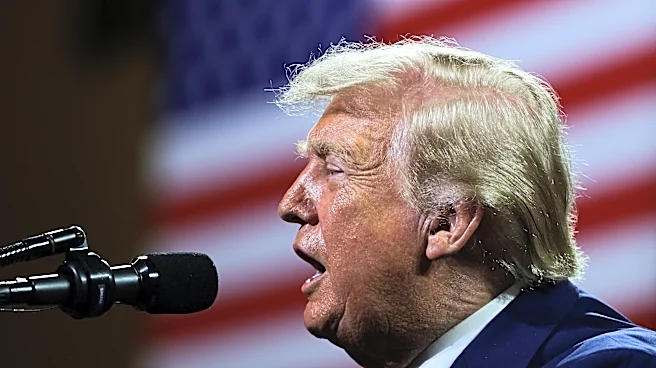
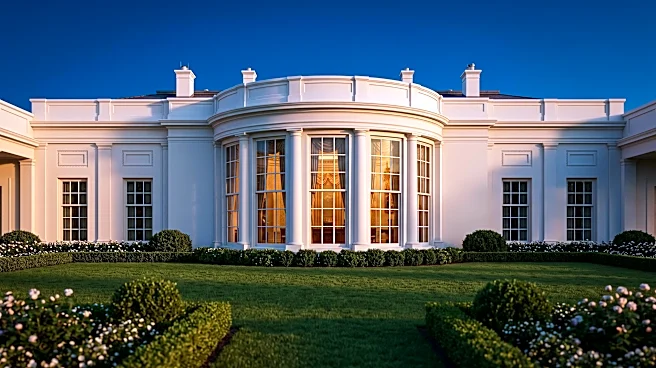
President Trump revealed that he rejected a suggestion from the U.S. Secret Service to demolish and rebuild the Oval Office. According to an interview with Time magazine, the Secret Service proposed taking down the existing structure and constructing
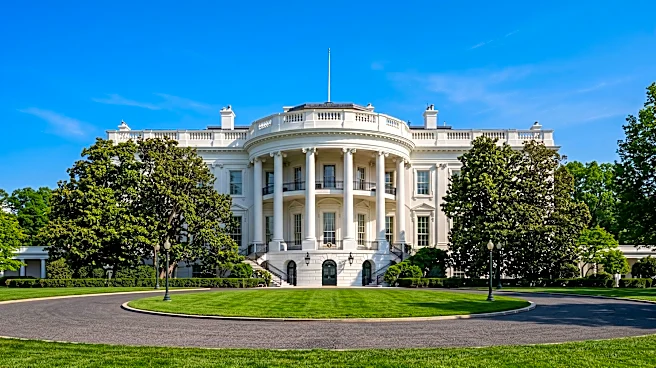
a new one. President Trump stated he emphatically refused, emphasizing the Oval Office's status as a "special place." He also mentioned his personal efforts in redecorating the Oval Office since his second term began, incorporating gold-colored appliqués, gilded mirrors, ornate Rococo-style decor, and a cursive gold sign. President Trump expressed pride in his renovations and indicated his desire to prevent future presidents from altering his changes by asking his chief of staff, Susie Wiles, to explore making the Oval Office a federal landmark. This follows his previous comments about the White House being a "dump" that he has worked to improve.
Why It's Important?
President Trump's decision to reject the Secret Service's proposal and his intent to designate the Oval Office as a federal landmark highlight a significant intersection of presidential authority, historical preservation, and personal legacy. The Oval Office is not merely an workspace but a powerful symbol of the U.S. presidency and American democracy. Any proposal to demolish it, even for security or structural reasons, would inevitably spark considerable debate about its historical and cultural significance. President Trump's desire to protect his specific renovations through landmark status underscores a broader theme of presidents seeking to leave a lasting mark on the White House and its iconic spaces. This move could set a precedent for future presidents attempting to enshrine their aesthetic choices, potentially limiting the flexibility of subsequent administrations to personalize the space, which has been a long-standing tradition. It also reflects a tension between practical considerations, such as security, and the preservation of historical integrity.
What's Next?
President Trump's chief of staff, Susie Wiles, will likely investigate the feasibility and process of designating the Oval Office as a federal landmark. This process would involve various governmental agencies and potentially require congressional approval, given the historical significance of the White House. Such a designation could face scrutiny and debate, as it would impact future presidential administrations' ability to redecorate or modify the space. The discussion around this proposal will likely involve historians, preservationists, and political commentators, all weighing in on the balance between presidential prerogative and the preservation of national heritage. The outcome could influence how future changes to historically significant government buildings are approached and regulated, potentially leading to new policies regarding the alteration of iconic national symbols.
Beyond the Headlines
The discussion surrounding the Oval Office's potential demolition and landmark status delves into deeper questions about national identity, historical memory, and the symbolic power of physical spaces. The Oval Office, as a site of critical decision-making and historical events, embodies the continuity of American leadership and democratic ideals. President Trump's personal investment in its aesthetics and his desire to make his changes permanent reflect a broader human impulse to leave an indelible mark on significant places. This raises ethical considerations about whose vision of history and aesthetics should prevail in national monuments. The debate also touches on the tension between the dynamic nature of presidential administrations, each bringing its own style and priorities, and the need to preserve the historical integrity of national symbols. Ultimately, this situation highlights how even seemingly aesthetic decisions about a building can become deeply intertwined with political legacy and national identity.