


What's Happening?
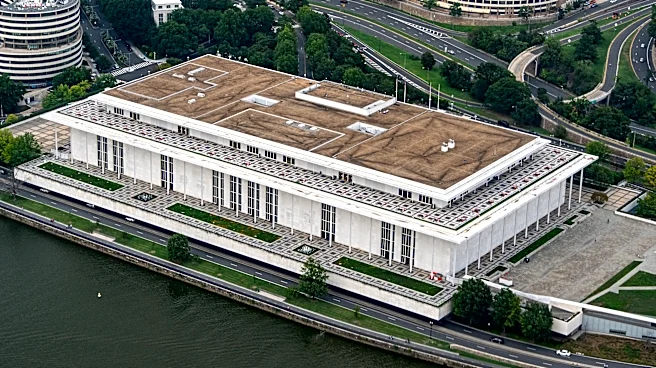
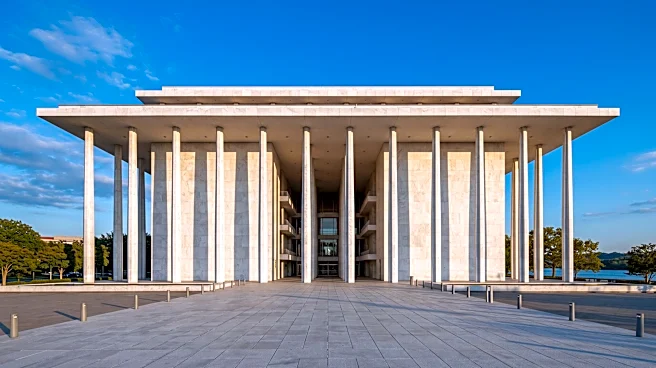
Justice Department attorneys have argued in a court filing that the John F. Kennedy Center for the Performing Arts could face demolition if President Trump's name is not included in its renovations. They claim that without this recognition, donor funding
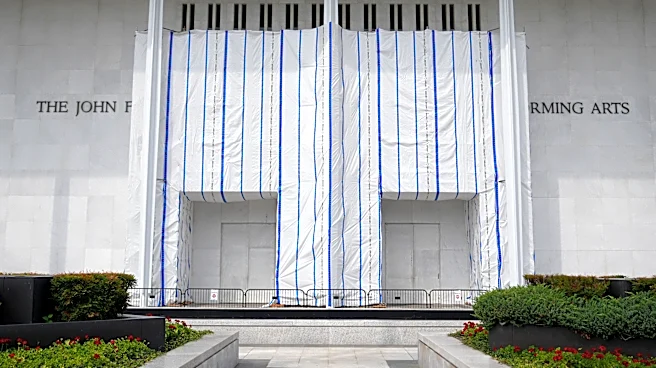
would 'shrivel up,' leading to the cultural center becoming 'decrepit, dilapidated,' and potentially 'required to be taken down.' This argument is part of an ongoing legal battle concerning attempts to add President Trump's name to the institution. An initial attempt to place 'Donald J. Trump' on the building's facade was blocked by a federal court in May, following a lawsuit from Democratic Rep. Joyce Beatty, an ex officio member of the Kennedy Center. Subsequently, the center's Trump-aligned board of trustees voted to propose alternative forms of recognition, such as appending 'Renovated and Restored By President Donald J. Trump' or 'Endowed by the Trump Kennedy Center Fund,' or renaming the plaza. Rep. Beatty has again asked the federal court to block these proposals, citing violations of the Kennedy Center statute, which prohibits making the center a memorial to anyone other than John F. Kennedy. A federal judge is scheduled to hear arguments on this request on Thursday.
Why It's Important?
This legal dispute has significant implications for the governance and funding of national cultural institutions. The Justice Department's assertion that donor support is contingent on political recognition raises questions about the independence and financial stability of such organizations. If the court sides with the DOJ, it could set a precedent where political figures' names become a prerequisite for essential funding, potentially politicizing cultural landmarks. Conversely, if Rep. Beatty's challenge is successful, it reinforces the statutory protections designed to preserve the original intent of these institutions. The controversy also highlights the broader tension between political influence and cultural preservation, particularly in Washington D.C., where several attempts have been made to affix President Trump's name to various projects. The Kennedy Center has reportedly experienced declining attendance and artist cancellations since President Trump's increased involvement, indicating a potential negative impact on its artistic mission and public perception.
What's Next?
A federal judge will hear arguments on Thursday regarding Rep. Joyce Beatty's request to block the latest attempts to add President Trump's name to the Kennedy Center. The outcome of this hearing will be crucial in determining whether the proposed forms of recognition are permissible under the Kennedy Center statute. If the court rules against the administration, it could force the board to seek alternative fundraising strategies or risk further deterioration of the facility, as warned by the Justice Department. Conversely, a ruling in favor of the administration could lead to the implementation of one of the proposed naming conventions, potentially sparking further public debate and legal challenges. The situation also raises questions about the long-term financial viability of the Kennedy Center and its ability to attract donors and artists amidst ongoing controversy. The broader implications for other national cultural institutions, particularly regarding political naming rights and funding, will also be closely watched.
Beyond the Headlines
The controversy surrounding the Kennedy Center's naming rights delves into the complex interplay between philanthropy, politics, and national heritage. The Justice Department's argument, suggesting that the center's physical existence is tied to the inclusion of a specific political figure's name, raises ethical concerns about the instrumentalization of cultural institutions for political purposes. This situation could set a troubling precedent, where the financial health and even the survival of public cultural assets become dependent on appeasing political demands rather than on their intrinsic artistic or historical value. The repeated attempts to add President Trump's name, despite legal challenges and public opposition, reflect a broader cultural and political struggle over how national achievements and figures are commemorated. It also highlights the challenges faced by non-profit cultural organizations in navigating political pressures while maintaining their mission and integrity. The decline in attendance and artist cancellations at the Kennedy Center suggest that politicization can alienate both the public and the artistic community, ultimately undermining the institution's purpose.