



What's Happening?
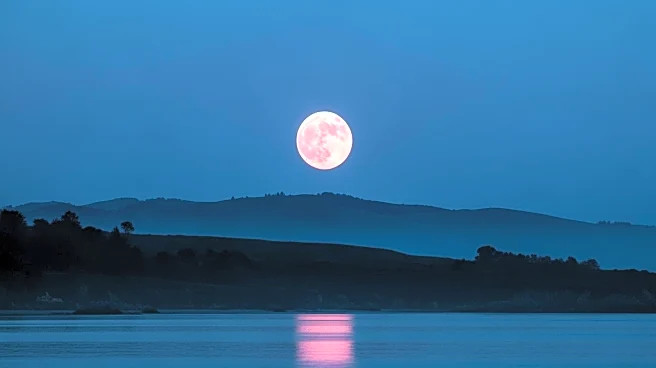
On the evening of April 1, 2026, residents across California, including Santa Barbara, will have the opportunity to witness a full 'Pink Moon.' Despite its name, the moon will not appear pink but will shine brightly as a full moon, potentially looking
larger as it rises above the horizon. The Pink Moon will reach its peak illumination at approximately 7:11 p.m. Pacific Time, shortly after moonrise, providing optimal viewing conditions as it coincides with sunset. The name 'Pink Moon' is derived from the pink wildflowers, known as pink phlox, that bloom in North America during early spring. This particular full moon is also referred to as the Paschal Moon, which is significant for determining the date of Easter. Other traditional names for April's full moon include the Breaking Ice Moon, Budding Moon of Plants and Shrubs, Frog Moon, and Sucker Moon.
Why It's Important?
The appearance of the Pink Moon is a notable astronomical event that marks the transition into spring, offering a natural spectacle for skywatchers and astronomy enthusiasts. It provides an opportunity for educational engagement and public interest in lunar phenomena. The timing of the Pink Moon, coinciding with the Paschal Moon, holds cultural and religious significance as it is used to calculate the date of Easter, a major Christian holiday. This event also highlights the cultural heritage associated with lunar naming traditions, reflecting the historical and seasonal observations of indigenous and early American communities. The widespread visibility across California, weather permitting, allows for a shared experience that can foster community interest in natural events.
What's Next?
Skywatchers in California are encouraged to find locations with clear eastern horizons to maximize their viewing experience of the Pink Moon. Coastal fog may affect visibility in some areas, while inland regions might offer clearer skies. As the moon rises shortly after sunset, it provides an ideal time for photography and observation. This event may also inspire educational programs and public gatherings focused on astronomy and cultural traditions related to lunar cycles. The Pink Moon serves as a reminder of the cyclical nature of celestial events, prompting anticipation for future astronomical occurrences.
Beyond the Headlines
The Pink Moon's cultural significance extends beyond its visual appeal, as it is intertwined with historical and seasonal traditions. The naming of the Pink Moon and its association with the Paschal Moon reflect the integration of natural phenomena into cultural and religious practices. This event underscores the importance of preserving and understanding indigenous and historical knowledge systems that have long observed and celebrated lunar cycles. Additionally, the Pink Moon can inspire discussions on the impact of light pollution on astronomical observations and the importance of preserving dark skies for future generations.