





What's Happening?
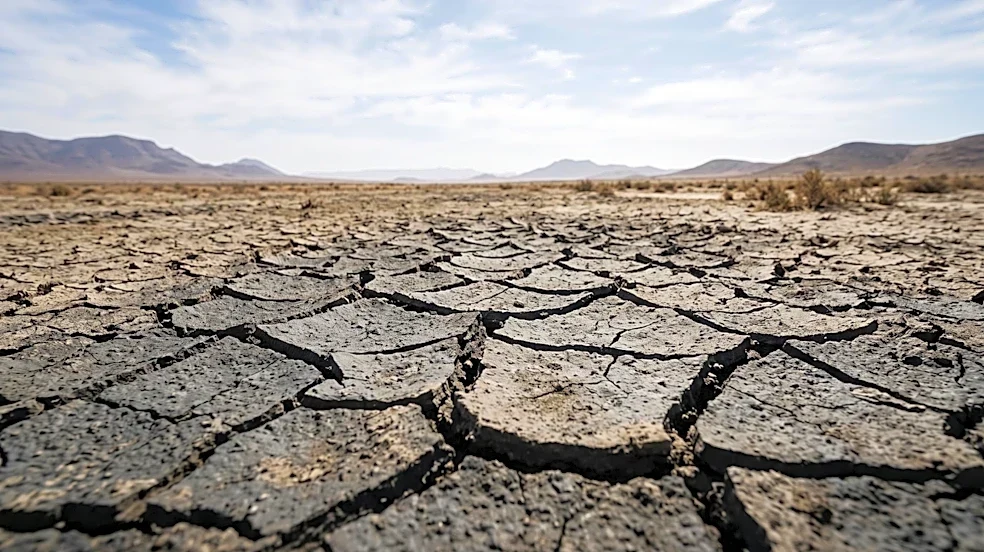
The International Food Policy Research Institute (IFPRI) has issued a warning regarding a critical 'data drought' impacting global food security monitoring systems. A new analysis by Jean-Martin Bauer and Steven Were Omamo highlights that budget cuts
and reduced field-level survey coverage are creating dangerous information gaps. While advanced tools like artificial intelligence, predictive modeling, and satellite remote sensing are valuable for estimating agricultural stress and supply shocks, they cannot fully replace direct, on-the-ground household interviews and local market price assessments. The report indicates that vulnerable regions, particularly in countries such as Somalia, Nigeria, and South Sudan, are experiencing shrinking surveillance coverage. This reduction in primary data collection makes it increasingly difficult to detect worsening emergencies and undermines the effectiveness of anticipatory humanitarian action. The authors emphasize that without consistent ground-level surveys to capture granular indicators like household coping mechanisms and daily dietary diversity, early warning systems struggle to identify catastrophic conditions.
Why It's Important?
This data drought poses a significant threat to global humanitarian efforts and the ability to effectively respond to food crises. The reliance on digital tools without sufficient ground-truth verification risks misdiagnosing the severity of localized famines or generating false negatives, especially in dynamic environments affected by rapid displacement or hyperinflation. The shift in donor priorities, often favoring immediate caloric delivery over foundational statistical infrastructure, has led to scaled-back representative surveys, creating blind spots in critical crisis corridors. This situation can result in delayed or inadequate humanitarian interventions, leading to increased suffering and loss of life in at-risk communities. The integrity of flagship monitoring initiatives, such as the Integrated Food Security Phase Classification (IPC), which rely on a combination of satellite imagery and high-frequency field surveys, is compromised by these funding cuts, potentially leading to less accurate assessments of food insecurity.
What's Next?
The authors of the IFPRI analysis are urging international development partners, multilateral institutions, and national governments to establish dedicated, long-term funding streams specifically for primary humanitarian statistics. Key indicators to monitor in the coming quarters include the publication of updated IPC food security assessments across the Horn of Africa and the Sahel. Additionally, it will be crucial to observe whether forthcoming international donor conferences formalize specific funding carve-outs to support ground-level statistical monitoring. Without a reversal of current funding declines and a renewed commitment to protecting essential field data pipelines, there is a risk that more at-risk communities could slip from view, making it harder to provide timely and effective humanitarian aid. The debate between technologists advocating for machine learning solutions and humanitarian analysts emphasizing ground-truth verification will likely continue as stakeholders seek the most effective and reliable methods for monitoring food security.
Beyond the Headlines
The 'data drought' highlights a broader systemic challenge in humanitarian aid: the tension between technological innovation and the fundamental need for human-centric data collection. While AI and satellite imagery offer efficiency and scale, they lack the nuanced understanding of local contexts, cultural factors, and individual coping strategies that direct surveys provide. This situation raises ethical questions about the potential for algorithmic bias and the risk of depersonalizing humanitarian response when decisions are made based on incomplete or generalized data. The long-term implications could include a decline in trust between aid organizations and affected communities if interventions are perceived as misaligned with on-the-ground realities. Furthermore, the erosion of foundational statistical infrastructure could hinder future research and policy development aimed at addressing the root causes of food insecurity, creating a cycle of reactive rather than proactive crisis management.