
What's Happening?
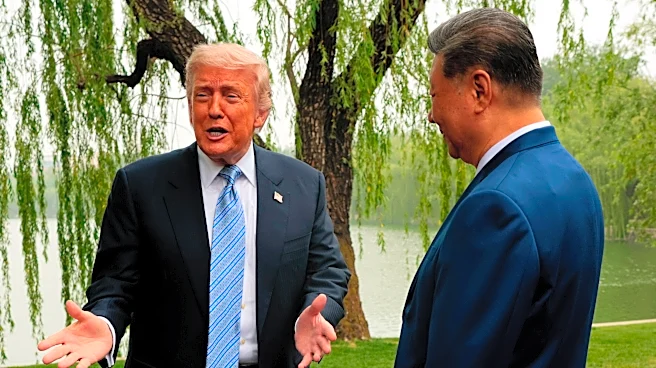
During President Trump's visit to China, President Xi Jinping issued a warning about potential 'clashes and conflicts' over Taiwan, emphasizing its importance in China-U.S. relations. The meeting, which
also covered trade and the U.S.-Iran conflict, saw Xi urging the U.S. to reduce its support for Taiwan, which China claims as its territory. Despite the cordial interactions, the underlying tensions over Taiwan remain a significant concern. Trump acknowledged Xi's leadership but did not publicly address the Taiwan issue in detail, focusing instead on trade agreements and regional stability.
Why It's Important?
The Taiwan issue is a critical point of tension in U.S.-China relations, with potential implications for regional stability and global economic dynamics. China's insistence on reunification and the U.S.'s strategic ambiguity regarding Taiwan's defense create a complex diplomatic challenge. The outcome of these discussions could influence U.S. foreign policy and its alliances in the Asia-Pacific region. The economic aspects of the summit, including potential trade deals, also have significant implications for both countries' economies, particularly in light of recent trade conflicts.
What's Next?
The U.S. will need to carefully consider its stance on Taiwan to avoid exacerbating tensions with China. Future discussions may focus on finding a diplomatic solution that addresses both countries' concerns. The potential for further trade negotiations remains, with both sides expressing interest in stabilizing their economic relationship. Xi's planned visit to the U.S. in September could provide another opportunity to address these issues.