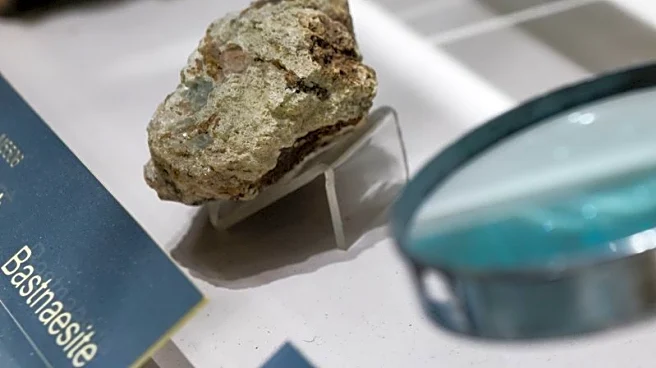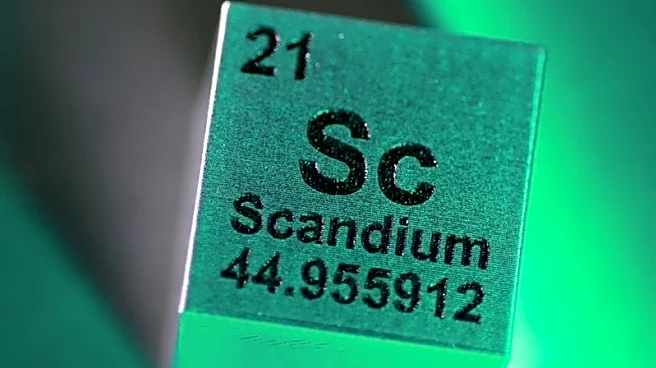

What's Happening?
Japan is set to conduct test mining of rare-earth-rich mud from the deep seabed off Minamitori Island, located 1,900 kilometers southeast of Tokyo. The operation, scheduled from January 11 to February
14, marks the world's first attempt to continuously lift rare-earth mud from a depth of around 6,000 meters. This initiative is part of Japan's efforts to secure stable supplies of critical minerals, as China, the dominant supplier of rare earths, tightens export controls. The test will focus on connecting the deep-sea mining system and confirming its ability to lift 350 metric tons of rare-earth mud per day. Environmental impacts will be monitored throughout the operation.
Why It's Important?
The test mining operation is a strategic move by Japan to reduce its reliance on China for rare earths, which are essential for various industries, including electronics and renewable energy. By developing domestic sources of rare earths, Japan aims to enhance its economic and maritime security. The success of this project could pave the way for full-scale mining operations, potentially altering the global supply chain for these critical minerals. Additionally, the environmental monitoring aspect of the project highlights the importance of balancing resource extraction with ecological preservation.
What's Next?
If the test mining operation is successful, Japan plans to conduct a full-scale mining trial in February 2027. The results of the test will inform future strategies for deep-sea mining and could lead to the development of new technologies for resource extraction. The project may also prompt other countries to explore similar initiatives, potentially reshaping the global market for rare earths. Ongoing geopolitical tensions, particularly with China, will likely influence Japan's approach to securing mineral resources.