









What's Happening?
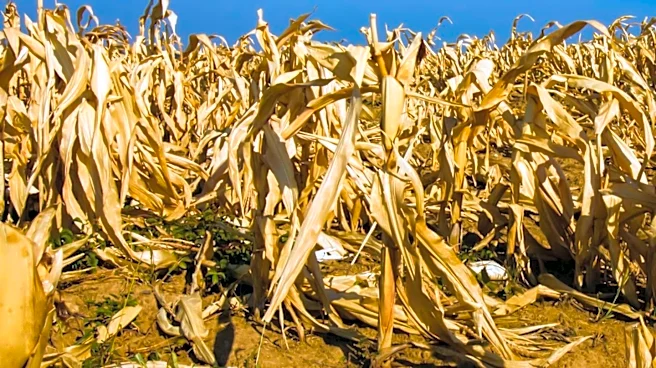
Nebraska farmers have achieved substantial progress in their harvest operations over the past week. According to the latest data from the USDA, 27% of the corn crop has been harvested, marking an 8% increase from the previous week. Concurrently, 91% of the corn crop has reached
maturity. For soybeans, 26% of the crop has been harvested, a significant jump from 9% a week prior, with 95% of the crop now dropping leaves. Sorghum harvest stands at 17%, up from 9% last week, and 71% of the sorghum crop is mature. Additionally, winter wheat planting is 81% complete, and 48% of the crop has emerged. Pasture and range conditions in Nebraska are rated as 47% poor to very poor, 24% good, and only 1% excellent.
Why It's Important?
The rapid progress in Nebraska's corn and soybean harvests is crucial for the state's agricultural sector and the broader U.S. economy. Nebraska is a major producer of these commodities, and efficient harvesting directly impacts the supply chain, commodity prices, and farmer incomes. A swift harvest, especially after a period of potential delays, can help stabilize market prices and ensure timely delivery to processing plants and export markets. The maturity rates indicate that the crops are ready for harvest, which is a positive sign for overall yield quality. However, the reported poor to very poor conditions for nearly half of the pasture and range land could signal challenges for livestock producers, potentially affecting feed costs and meat production in the coming months. This situation highlights the interconnectedness of different agricultural sectors and their vulnerability to environmental conditions.
What's Next?
Farmers in Nebraska are expected to continue their harvesting efforts, aiming to complete the corn and soybean harvests as efficiently as possible before adverse weather conditions set in. The focus will likely shift to storage and transportation logistics as the harvested crops move from fields to silos and markets. For winter wheat, continued emergence and establishment will be critical for a successful crop next year, with farmers monitoring weather patterns for optimal growth conditions. The USDA will continue to release weekly updates, providing further insights into the progress and any potential challenges. Livestock producers will need to assess the impact of poor pasture conditions on their herds and potentially adjust feeding strategies or consider alternative feed sources, which could influence local and regional feed markets.
Beyond the Headlines
The harvest progress in Nebraska underscores the resilience and adaptability of the U.S. agricultural industry in the face of varying environmental conditions. Beyond the immediate economic implications, the efficiency of modern farming practices, including advanced machinery and data-driven decision-making, plays a significant role in these outcomes. The disparity between crop harvest progress and pasture conditions also highlights the complex and often localized impacts of weather patterns on different agricultural segments. This situation could prompt discussions on long-term strategies for drought resilience and sustainable land management practices within the state. Furthermore, the data provides valuable insights for agricultural policymakers and researchers to better understand and support the needs of farmers and the broader food supply chain.