


What's Happening?
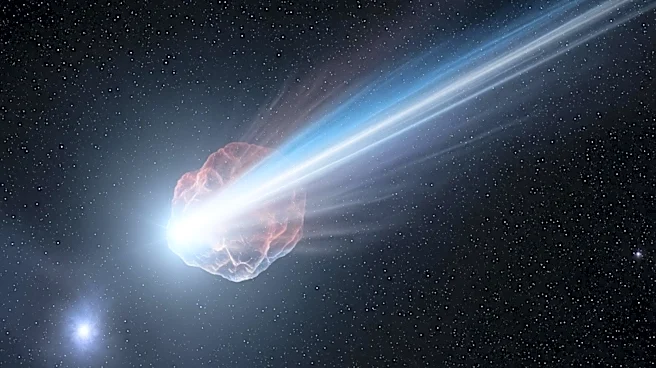
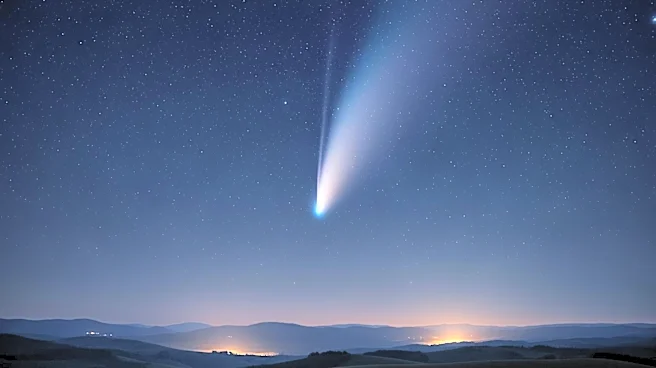
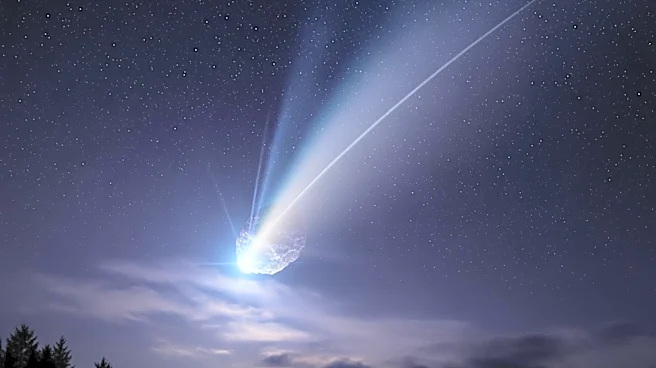
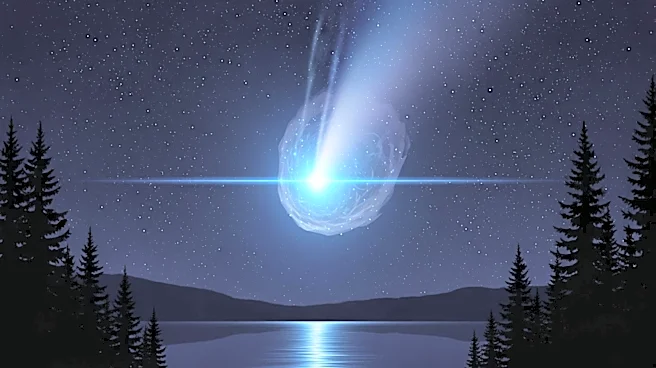
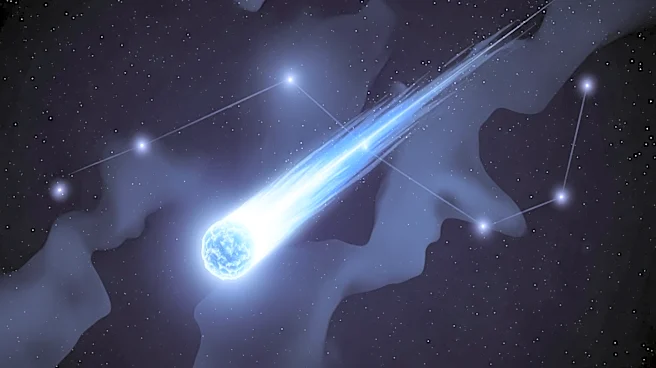
A newly-discovered 'great comet', Comet C/2025 R3 (PanSTARRS), is expected to be one of the brightest comets of 2026. It will be visible from mid-April through early May, with its highest visibility on April 17 due to the new moon, which will darken skies
and enhance the comet's brightness. The comet will pass near the Sun, potentially brightening as it releases gas and dust to form a glowing tail. Early projections suggest its brightness could range from a magnitude of 8, requiring a telescope, to 2.5, visible to the naked eye in dark locations. Stargazers are advised to find dark locations away from city lights and use stargazing apps to track the comet's nightly position.
Why It's Important?
The appearance of Comet C/2025 R3 offers a unique opportunity for astronomers and enthusiasts to observe a celestial event that could provide insights into cometary behavior and solar system dynamics. Such events can stimulate public interest in astronomy and science, potentially influencing educational programs and inspiring future scientific exploration. The comet's visibility in the Northern Hemisphere before sunrise and its shift to the Southern Hemisphere after sunset could also foster international collaboration among astronomers and stargazers.
What's Next?
As Comet C/2025 R3 makes its closest approach to the Sun in late April, astronomers will closely monitor its behavior, including potential changes in brightness and trajectory. Viewing conditions may be affected by the full moon on May 1, which could impact visibility. Stargazers are encouraged to use live trackers and apps to optimize their viewing experience. The comet's journey through the inner solar system will continue to be a subject of interest for both professional and amateur astronomers.