





What's Happening?
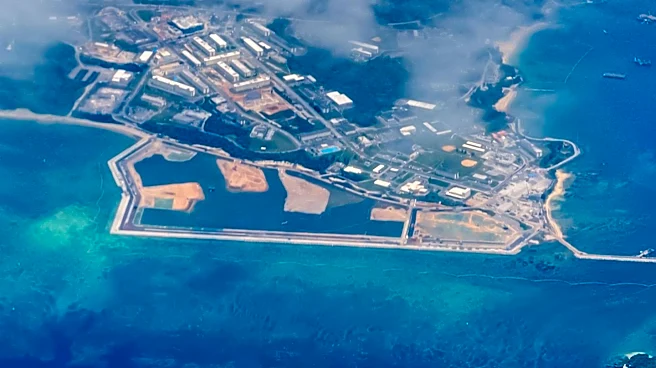
China has formally dismissed the Philippines' maritime jurisdiction claims in the South China Sea, labeling them as "illegal, null and void." This rejection follows a formal demand from the Philippine Department of Foreign Affairs (DFA) for China to cease
operations on Panganiban Reef (Mischief Reef) and Zamora Reef (Subi Reef). Chinese Foreign Ministry Spokesperson Guo Jiakun stated that the Nansha Qundao, including the contested reefs, are China's inherent territory, making any construction or activities there legitimate and lawful. Guo argued that the Philippines' territorial boundaries are defined by international treaties that do not include the Nansha Islands, and therefore, Manila's claim of maritime jurisdiction over these areas is illegal. Beijing also reiterated its refusal to acknowledge the 2016 South China Sea Arbitral Award, which upheld the Philippines' claims, calling it a "political manipulation" with no binding force. Furthermore, China criticized the Philippines' 'Maritime Zones Act' for illegally incorporating Chinese territories into its maritime zone, asserting this as a grave violation of China's sovereignty and interests.
Why It's Important?
This ongoing dispute in the South China Sea carries significant implications for international law, regional stability, and global trade. China's consistent rejection of the 2016 Arbitral Award undermines the international legal framework for resolving maritime disputes and sets a precedent that could embolden other nations to disregard international rulings. The South China Sea is a critical waterway for global shipping, and increased tensions or potential military escalation could disrupt trade routes, impacting global supply chains and economies. For the U.S., a key ally of the Philippines, the situation tests its commitment to freedom of navigation and its alliances in the Indo-Pacific. The U.S. has consistently advocated for adherence to international law in the region. The dispute also highlights the broader geopolitical competition between China and the U.S. for influence in Asia, with potential ramifications for military presence and strategic alliances. The Philippines' assertion of its rights, backed by international law, is crucial for maintaining a rules-based international order, while China's firm stance reflects its growing assertiveness in claiming what it considers its sovereign territory.
What's Next?
China has called on the Philippines to cease unilateral actions in the contested waters and warned that Beijing is prepared to defend its territorial claims with resolute measures. The Philippines, in turn, has reaffirmed its commitment to asserting its sovereignty, sovereign rights, and jurisdiction in the West Philippine Sea, and will continue to champion its legitimate rights and interests in the maritime domain. The DFA has demanded an immediate cessation of Beijing's presence and activities on the contested features. The situation suggests a continued diplomatic standoff, with both sides maintaining their firm positions. Future developments may include further confrontations between Chinese and Philippine vessels, increased diplomatic pressure from international bodies and allies, and potentially new legal or political maneuvers by either nation. The involvement of other regional and global powers, such as India, which has reaffirmed its stance on the region, could also influence the trajectory of the dispute. The potential for military escalation remains a significant concern, particularly given the persistent confrontations.
Beyond the Headlines
The dispute extends beyond mere territorial claims, touching upon fundamental principles of international law, national sovereignty, and regional power dynamics. China's dismissal of the 2016 Arbitral Award, despite being a signatory to the United Nations Convention on the Law of the Sea (UNCLOS), raises questions about the enforceability of international legal judgments and the future of multilateral governance. The Philippines' invocation of international law and domestic legislation highlights the struggle of smaller nations to assert their rights against more powerful states. The ongoing artificial island construction and military buildup by China in the South China Sea also have significant environmental implications, impacting marine ecosystems and traditional fishing grounds. Culturally, the dispute fuels nationalistic sentiments in both countries, potentially hindering future cooperation and fostering long-term animosity. The broader implication is a shift in the international order, where traditional norms and legal frameworks are increasingly challenged by assertive national interests, leading to a more unpredictable and potentially volatile geopolitical landscape.