








What's Happening?
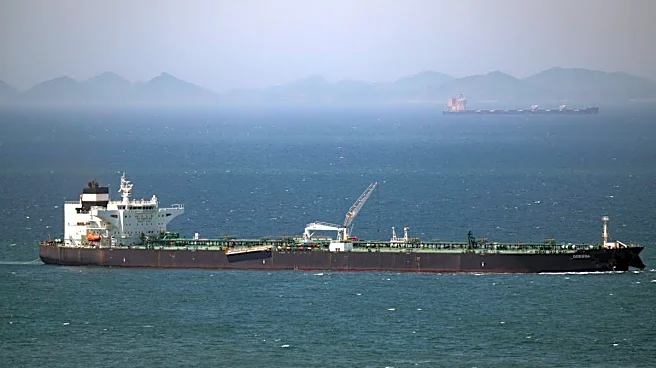
Gasoline prices in the United States have surged significantly due to the ongoing conflict with Iran, with the national average reaching $4.56 per gallon in May 2026. This increase is attributed to disruptions in global oil supply, particularly through
the Strait of Hormuz, a critical passage for oil transit. The conflict began on February 28, 2026, when the U.S. and Israel launched joint strikes on Iran, reversing a previous trend of falling gas prices. Currently, the average price is approximately $1.5 higher than pre-conflict levels. In California, prices have exceeded $6 per gallon, while in Mississippi, they are just below $4. Despite a potential agreement to reopen the Strait of Hormuz, experts predict that gas prices may not return to pre-war levels until the second half of 2027.
Why It's Important?
The sustained high gas prices have significant implications for the U.S. economy and consumers. Elevated fuel costs can lead to increased transportation and production expenses, affecting various sectors and potentially leading to higher prices for goods and services. This situation places a financial burden on American families, particularly those in states with the highest gas prices. The energy market's volatility underscores the geopolitical risks associated with oil dependency and highlights the need for diversified energy sources. The prolonged recovery period for gas prices also suggests potential long-term economic adjustments and challenges for policymakers in managing energy security and economic stability.
What's Next?
The resolution of the conflict and the reopening of the Strait of Hormuz are critical to stabilizing oil supply and reducing gas prices. However, even with a resolution, experts caution that it will take time for oil shipments to normalize and for prices to decrease significantly. The U.S. government and energy analysts will likely continue to monitor the situation closely, with potential policy adjustments to mitigate the impact on consumers. Additionally, ongoing negotiations and diplomatic efforts may influence the timeline for recovery, with stakeholders in the energy sector preparing for various scenarios.