


What's Happening?
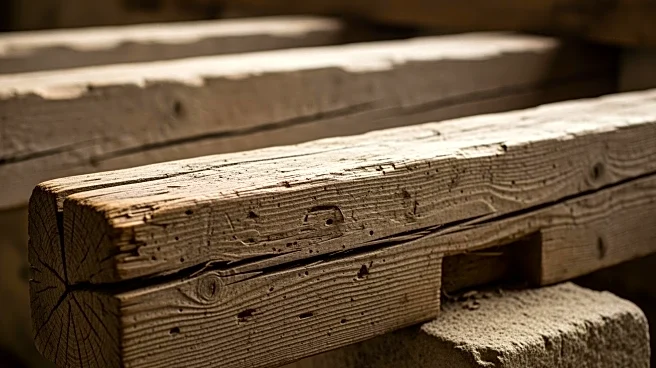
Thousands of historic buildings in Boston are at risk of structural failure due to their foundations being built on 200-year-old wood pilings. These buildings, which are part of Boston's architectural heritage, were constructed on reclaimed land using
tree trunks as foundational support. This method, while effective for centuries, is now compromised as groundwater levels in the city have been steadily dropping. The Boston Groundwater Trust has identified approximately 6,000 buildings that are vulnerable to this issue. The exposure of these wood pilings to air has led to microbial decay, threatening the integrity of the structures. Some notable landmarks, such as the Boston Public Library and Trinity Church, have already undergone costly repairs to address this problem.
Why It's Important?
The potential collapse of these historic buildings poses a significant threat to Boston's cultural and architectural heritage. The financial implications are substantial, as repairs can cost upwards of $300,000 per building. This situation not only affects property owners but also impacts the city's tourism and real estate markets. The preservation of these structures is crucial for maintaining the historical character of Boston, which is a key attraction for visitors and a source of local pride. Additionally, the issue highlights the broader challenges of maintaining aging infrastructure in urban areas, particularly those with historical significance.
What's Next?
Efforts to address the problem will likely involve increased monitoring of groundwater levels and the implementation of more widespread repair initiatives. Property owners may need to seek financial assistance or incentives to undertake the necessary repairs. The city might also consider policy measures to support the preservation of these buildings. As awareness of the issue grows, there could be increased advocacy for heritage conservation and sustainable urban planning to prevent similar problems in the future.
Beyond the Headlines
This situation underscores the importance of integrating modern engineering solutions with historical preservation efforts. It raises questions about the sustainability of traditional building methods in the face of environmental changes. The challenge also presents an opportunity for innovation in construction techniques that respect historical integrity while ensuring structural safety. Furthermore, it highlights the need for cities to proactively manage their historical assets in the context of climate change and urban development.