







What's Happening?
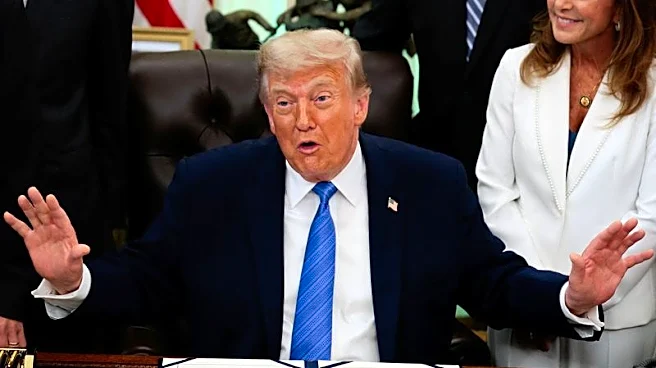
President Trump announced a deal with Iran to end the military conflict between the two nations. The agreement, facilitated by Pakistani mediators, includes the termination of military operations on all fronts, including in Lebanon. The U.S. will lift
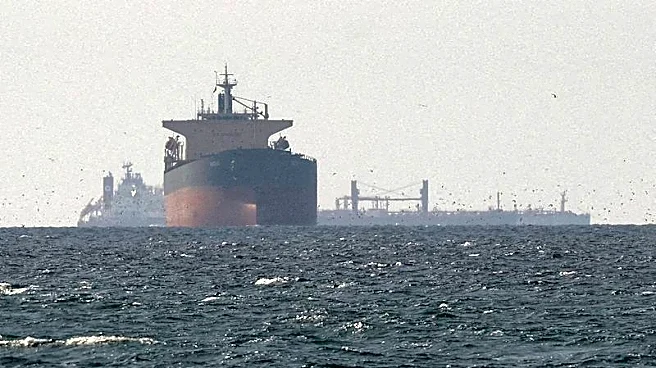
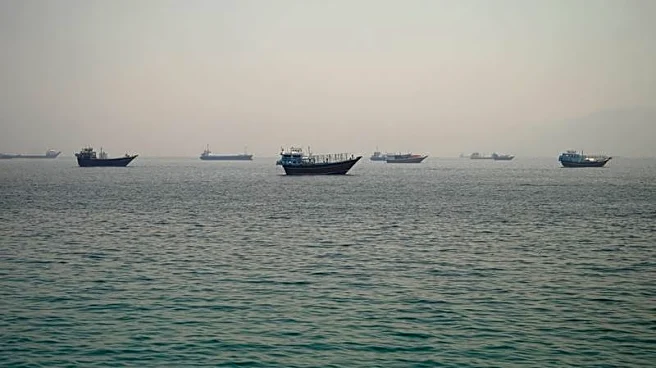
its naval blockade of the Strait of Hormuz, a critical passage for global oil and gas. The deal is set to be officially signed in Switzerland, with further discussions planned to ensure its implementation. The agreement is seen as a diplomatic victory for Iran, which has controlled the Strait since the conflict began.
Why It's Important?
The agreement marks a significant de-escalation in U.S.-Iran tensions, potentially stabilizing the region and reopening vital oil trade routes. The lifting of the blockade could have substantial economic implications, particularly for global oil markets. The deal also reflects the effectiveness of international mediation in resolving conflicts. However, the absence of a resolution on Iran's nuclear program remains a critical issue, with European leaders emphasizing the need for verifiable steps to prevent Iran from acquiring nuclear weapons.
What's Next?
The official signing of the agreement is scheduled for Friday in Switzerland. Preparatory meetings will take place in Doha to lay the groundwork for technical talks. The international community will be watching closely to see how the agreement is implemented and whether it leads to a broader resolution of outstanding issues, including Iran's nuclear ambitions. The response from Israel, which is not a party to the agreement, will also be a key factor in the region's stability.