



What's Happening?
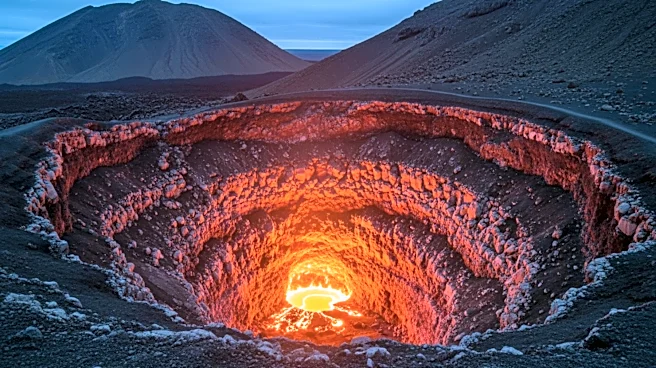
Iceland is currently experiencing an ongoing earthquake swarm in two of its most geologically active areas: the Reykjanes Ridge and the Bárðarbunga volcanic system. The activity began over the weekend and has continued with multiple tremors, including
several above magnitude 2.0. The strongest recorded event was a magnitude 3.0 earthquake near Geirfugladrang. These swarms are a common occurrence in Iceland due to its location on the Mid-Atlantic Ridge, where tectonic plates are moving apart. The Reykjanes Peninsula has seen repeated periods of unrest, including volcanic eruptions, while Bárðarbunga is known for its seismic activity beneath the Vatnajökull glacier.
Why It's Important?
The ongoing seismic activity in Iceland highlights the country's unique geological dynamics and the constant monitoring required to ensure public safety. Such events can have significant implications for local communities, infrastructure, and tourism. Understanding these patterns is crucial for predicting potential volcanic eruptions, which could disrupt air travel and impact the global climate. The situation underscores the importance of geological research and preparedness in regions prone to seismic activity.