







What's Happening?
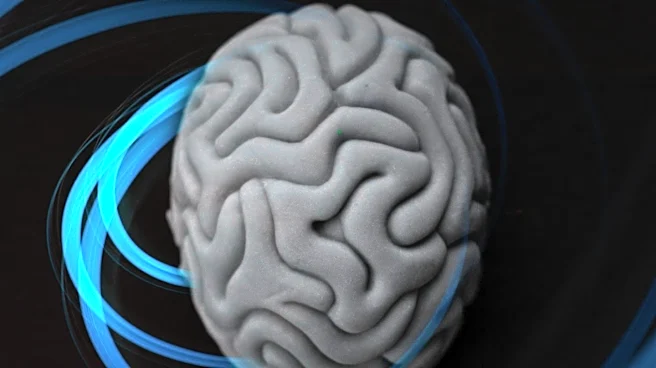
A new study published in Nature Communications details the Knight Alzheimer Research Imaging (KARI) dataset, a comprehensive resource containing over 6,200 brain scans. This dataset, developed by the Knight Alzheimer Disease Research Center at Washington
University in St. Louis, spans the spectrum from healthy aging to symptomatic Alzheimer's disease (AD). It includes structural, functional, and diffusion MRI, as well as PET imaging for amyloid and tau proteins, alongside clinical, cognitive, and genetic information. The study highlights the dataset's utility in examining the earliest brain changes associated with AD, often occurring years before cognitive symptoms manifest. Researchers utilized the dataset to identify associations between imaging biomarkers and clinical and cognitive status, demonstrating that greater cortical thinning, higher amyloid burden, and increased tau burden are consistently linked to poorer cognitive performance.
Why It's Important?
This dataset is crucial for understanding the preclinical phase of Alzheimer's disease, a period where interventions are believed to be most effective. The KARI dataset's longitudinal nature, deep phenotyping, and uniform data collection standards provide a robust foundation for identifying trajectories of disease progression rather than just cross-sectional comparisons. By combining multimodal imaging with long-term clinical follow-up, researchers can investigate how changes in brain structure relate to the accumulation of AD-associated proteins in the same individuals. This resource allows for the study of individuals who are cognitively normal but show AD-related brain pathology, distinguishing healthy aging from preclinical disease. Such insights are vital for developing earlier detection methods, validating biomarkers, and refining disease models, ultimately aiming to delay cognitive decline and improve outcomes for AD patients.
What's Next?
The KARI dataset is now available to qualified researchers, providing a powerful tool for hypothesis generation and biomarker validation. Future research utilizing this resource will likely focus on further investigating disease mechanisms, identifying new biomarkers, and developing more precise diagnostic and prognostic tools for AD. The study emphasizes the need for future findings to be confirmed in more diverse populations, as the current cohort has a relatively high educational level and is predominantly White. This suggests that subsequent research may involve expanding the dataset or conducting parallel studies in more varied demographic groups to ensure generalizability. The insights gained are expected to inform the development of targeted therapeutic strategies for early-stage AD.
Beyond the Headlines
The KARI dataset's ability to track brain changes in cognitively unimpaired individuals with AD pathology raises significant ethical considerations regarding the communication of risk and the potential for 'pre-diagnosis' of a disease without a cure. The implications for individuals, families, and healthcare systems are substantial, as it could lead to increased anxiety and demand for interventions that may not yet exist. Furthermore, the dataset's demographic limitations highlight broader issues of health equity and representation in medical research. Ensuring that future studies and interventions are applicable to a diverse population is critical to avoid exacerbating existing health disparities. The long-term impact of such comprehensive datasets will shape not only medical practice but also societal perceptions of aging, cognitive health, and the role of early detection in chronic diseases.