



What's Happening?
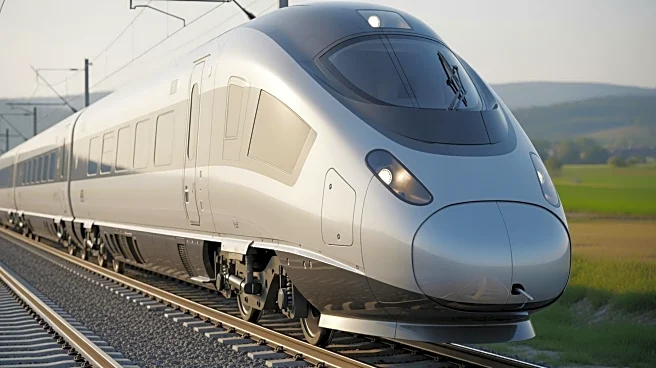
Amtrak has introduced its new Airo train fleet as part of a significant modernization effort aimed at transforming passenger rail service across the United States. At a recent event, Amtrak President Roger Harris, along with other key figures such as USDOT
Deputy Transportation Secretary Steve Bradbury and Siemens Mobility CEO Tobias Bauer, showcased the first of these new trains. The Airo fleet is designed to offer improved comfort, reliability, and connectivity for passengers. The first Airo trainsets are expected to begin service on the Amtrak Cascades route, which connects Seattle, Portland, Vancouver, BC, and Eugene, Oregon, by 2026. This initiative is part of a broader strategy to expand capacity and enhance the quality of service across multiple corridors nationwide.
Why It's Important?
The introduction of the Airo fleet represents a pivotal moment for Amtrak and the future of rail travel in the U.S. By modernizing its fleet, Amtrak aims to meet the growing demand for passenger rail services and improve the overall travel experience. This move is expected to increase capacity and reliability, which could attract more passengers to choose rail over other modes of transportation. The Airo trains, along with the previously launched NextGen Acela, are part of a comprehensive plan to reshape the travel landscape, potentially leading to economic benefits through increased tourism and reduced road congestion. The modernization effort also aligns with broader environmental goals by promoting a more sustainable mode of transportation.
What's Next?
Amtrak plans to deploy 83 Airo trainsets across various routes in the coming years, forming the backbone of a modernized rail network. The Northeast Regional route is set to receive its first Airo trainsets by 2027, following testing and production completion. As these trains are rolled out, Amtrak will continue to focus on enhancing the end-to-end travel experience for customers. Stakeholders, including government agencies and transportation planners, will likely monitor the impact of these changes on passenger numbers and service efficiency. The success of the Airo fleet could influence future investments in rail infrastructure and technology.