





What's Happening?
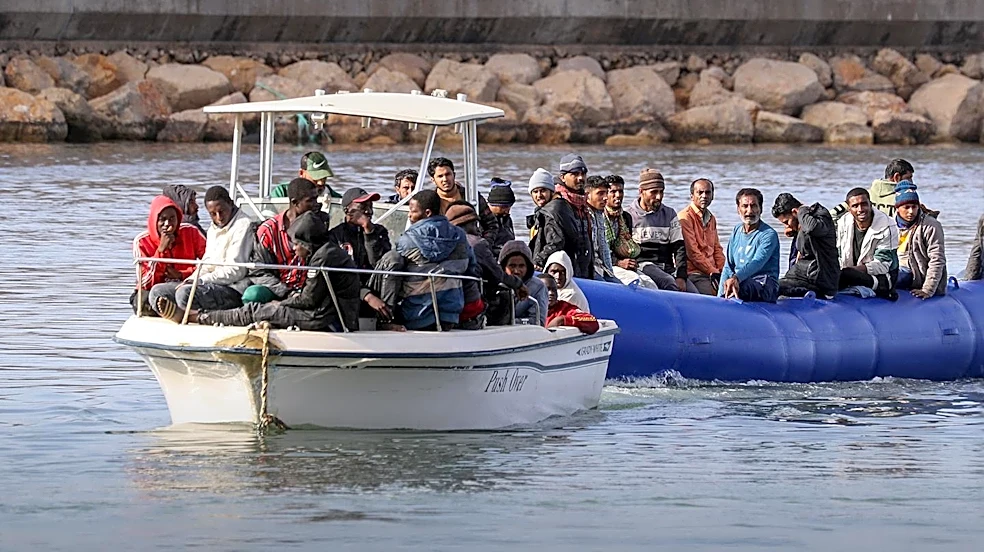
The Greek island of Crete is struggling to accommodate a significant influx of migrants arriving from Libya. Over the weekend of October 10-11 and into the following Tuesday, more than 17 boats, carrying approximately 1,000 migrants, reached the Ierapetra
coast guard's area of responsibility. Nine of these boats made it to shore, while the remaining were intercepted by Frontex drones or coast guard aircraft dozens of nautical miles out, with coast guard vessels bringing the migrants in. The total number of arrivals on Crete this year has surpassed 19,000. Migrants are being housed in a municipal depot in Ierapetra, where men, women, and children are sheltering in or under trucks. The coast guard has dispatched a liaison officer to Benghazi to engage with Libyan authorities regarding the situation. Migrants have reported being subjected to beatings and imprisonment by a 'Libyan mafia' until they pay for their release.
Why It's Important?
The escalating migration crisis in the Mediterranean, particularly the increased flow from Libya to European shores like Crete, highlights significant humanitarian and geopolitical challenges. For Greece and other frontline European Union member states, the continuous arrivals strain existing resources and infrastructure, leading to inadequate living conditions for asylum seekers. This situation also underscores the instability in Libya, where human trafficking networks operate with apparent impunity, exploiting vulnerable individuals. The reported involvement of a 'Libyan mafia' in detaining and extorting migrants points to a breakdown of law and order, further complicating international efforts to manage migration flows and protect human rights. The crisis could also exacerbate political tensions within the EU as member states debate responsibility-sharing for asylum seekers.
What's Next?
The Greek coast guard's deployment of a liaison officer to Benghazi indicates an attempt to pressure Libyan authorities to address the root causes of the migration flow, including the activities of human trafficking networks. However, the migrants' accounts suggest that such efforts may face significant challenges due to the entrenched nature of these criminal organizations. Without a stable and unified government in Libya capable of effectively controlling its borders and combating human trafficking, the influx of migrants to Europe is likely to continue. The EU may need to consider more comprehensive strategies, including increased support for Libya's stabilization, enhanced border security measures, and improved reception facilities in frontline states like Greece, to manage this ongoing humanitarian and security challenge.
Beyond the Headlines
The situation in Crete is a microcosm of the broader humanitarian crisis unfolding across the Mediterranean, where political instability, economic hardship, and conflict in North Africa and the Middle East drive desperate individuals to seek refuge in Europe. The 'Libyan mafia' described by migrants represents a dark facet of this crisis, illustrating how human desperation is monetized by criminal enterprises. This not only poses a direct threat to the lives and dignity of migrants but also undermines international efforts to establish safe and legal migration pathways. The long-term implications include potential demographic shifts in host countries, increased pressure on social services, and the ethical dilemma of balancing national sovereignty with humanitarian obligations. Addressing this complex issue requires a multi-faceted approach that tackles both the immediate humanitarian needs and the underlying causes of forced migration.