




What's Happening?
Boston Mayor Michelle Wu announced that city officials are working to identify any private property owners who responded to a recent U.S. Immigration and Customs Enforcement (ICE) proposal to lease parking spaces in Boston. In late July, ICE published
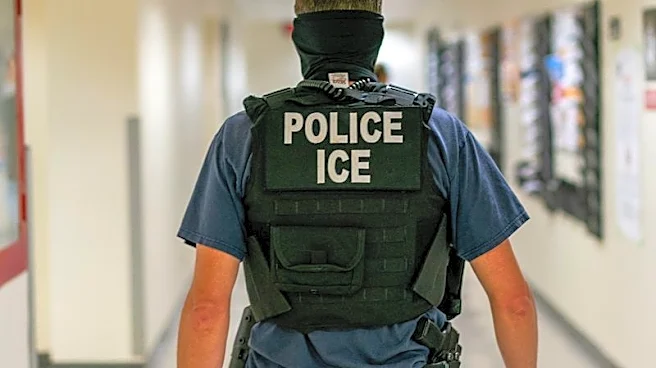
a notice on a government procurement website seeking information from cities nationwide, including Boston, regarding potential surface or structured vehicle parking spaces. ICE indicated a need for 249 parking spaces in Boston. Mayor Wu stated that the city has not received direct communication from ICE and plans to file a Freedom of Information Act (FOIA) request to obtain responses from the Boston area regarding the parking lease notice. The mayor's administration also intends to contact private property owners to inform them of the city's stance against facilitating ICE operations, emphasizing concerns about resident safety. Earlier this year, Mayor Wu took action to prohibit federal officials from using city-owned property for immigration raids or detainee processing.
Why It's Important?
This development highlights the ongoing tension between federal immigration enforcement agencies and local 'sanctuary' cities like Boston. Mayor Wu's proactive measures, including the FOIA request and direct outreach to property owners, underscore a municipal government's efforts to limit federal immigration activities within its jurisdiction. The potential leasing of private parking spaces by ICE could enable increased enforcement operations in Boston, which the mayor views as detrimental to community safety and trust. This situation reflects a broader national debate about local control versus federal authority in immigration matters. For residents, particularly immigrant communities, the city's actions aim to mitigate fears and protect civil liberties, while for ICE, securing operational space is crucial for its mission. The outcome of Boston's efforts could influence how other cities respond to similar federal inquiries and further shape the landscape of immigration enforcement at the local level.
What's Next?
Boston city officials will proceed with filing a Freedom of Information Act request to ICE to uncover which private property owners, if any, responded to the agency's parking lease inquiry. Concurrently, the Wu administration plans to engage directly with private property owners in Boston to convey its opposition to leasing space to ICE and to explain the potential implications for residents. While Mayor Wu acknowledges she cannot legally prevent ICE from leasing private property, these actions aim to deter such agreements and raise public awareness. The situation could lead to increased public discourse and potential protests, similar to past demonstrations against ICE operations. The response from private property owners and the transparency of ICE regarding its plans will be critical in determining the next steps and the extent of federal immigration enforcement presence in Boston.
Beyond the Headlines
The controversy surrounding ICE's parking lease inquiry in Boston extends beyond mere logistics; it touches upon fundamental questions of community trust, local autonomy, and the human impact of immigration policies. Mayor Wu's strong opposition, rooted in concerns about 'life to death consequences' and the actions of 'poorly trained officers,' reflects a deep-seated belief that aggressive federal enforcement can undermine public safety by eroding trust between law enforcement and immigrant communities. The reference to incidents in Minnesota and Maine, including a fatal shooting by an ICE agent, underscores the high stakes involved. This situation also highlights the strategic challenges faced by federal agencies when local governments actively resist their operations. The city's efforts to identify and engage with private property owners represent a novel approach to local resistance, potentially setting a precedent for how cities can indirectly influence federal activities within their borders. This ongoing struggle illustrates the complex and often contentious relationship between different levels of government on immigration issues.