



What's Happening?
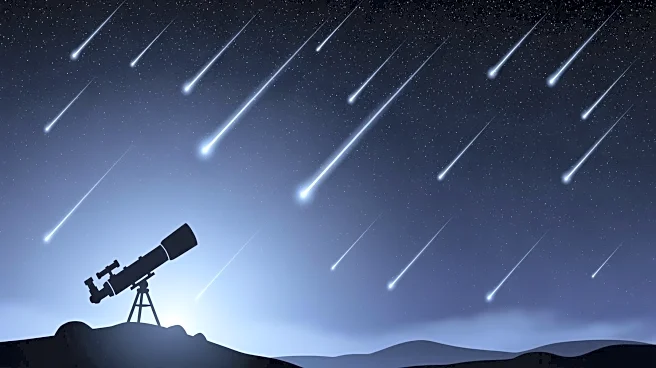
The American Meteor Society (AMS) has observed a significant increase in large fireball events during the first quarter of 2026. This surge, noted in an analysis of records dating back to 2011, is described as 'warranting serious investigation.' The enhanced
activity is reportedly originating from a specific part of the sky, opposite the Sun, and is occurring at roughly double the normal density. This pattern was particularly evident in March 2026, with a series of meteor sightings across the United States, including notable events in Texas, California, and Ohio. The AMS highlighted that the increase is not in the total number of fireballs but in the size and visibility of these events, with many producing sonic booms, indicating deeper and larger entries into the atmosphere. The organization has ruled out new meteor showers, seasonal variations, or increased reporting due to smartphone use as causes for this surge.
Why It's Important?
The unusual increase in meteor activity has significant implications for scientific research and public safety. Understanding the reasons behind this surge could provide insights into the behavior of meteors and the potential risks they pose. The AMS's findings suggest a genuine enhancement in the sporadic fireball background, particularly at the larger end of the size distribution. This could indicate an uncharacterized debris population or other unknown factors affecting meteor activity. The increased frequency of large fireballs and associated sonic booms could impact aviation safety and public awareness. Additionally, the need for further investigation highlights the importance of continued monitoring and research in the field of astronomy and atmospheric science.
What's Next?
The AMS has called for expanded camera coverage, laboratory analysis of recovered meteorites, and enhanced cross-checks with radar, infrasound, and satellite data to better understand the causes of this increased meteor activity. These efforts aim to determine whether the surge is due to normal statistical variance, an uncharacterized debris population, or other factors. Continued monitoring and analysis will be crucial in identifying the underlying reasons for this phenomenon and assessing any potential risks. The AMS's proactive approach underscores the need for collaboration among scientific communities to address these questions and ensure public safety.