






What's Happening?
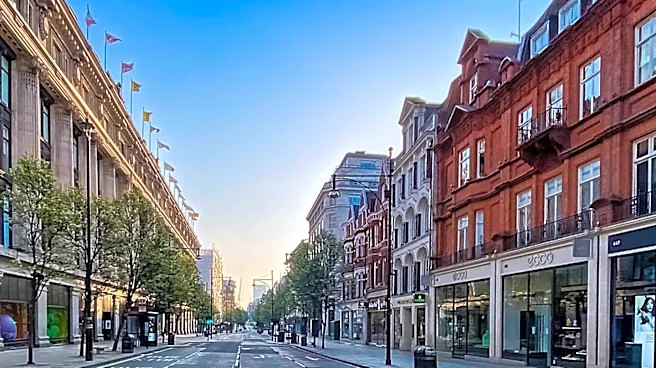
The World Travel & Tourism Council (WTTC) has lauded London as a prime example for tourism sector growth, particularly highlighting the recent pedestrianization of Oxford Street. This development coincides with the World Travel Market (WTM) in London,
where global travel industry leaders are convened. The WTTC projects a 3.1% growth for the European travel sector in 2026, surpassing the 2.6% growth recorded in the previous year. London attracted an estimated 16.4 million international visitors in 2025, positioning it among the top cities globally for visitor numbers. The pedestrianization of nearly a kilometer of Oxford Street, a project led by the Mayor of London, Sadiq Khan, and supported by the UK Government, aims to revitalize the area and enhance the visitor experience. This initiative is seen as a strategic investment in the city's tourism infrastructure.
Why It's Important?
This recognition from the WTTC underscores the significant economic impact of strategic investments in tourism infrastructure. London's approach, particularly the Oxford Street pedestrianization, serves as a model for other cities and governments looking to boost their travel and tourism sectors. The projected growth in the European travel sector, with international visitor spending expected to rise by 5.8% in 2026, indicates a robust recovery and expansion for the industry. For the U.S., this trend suggests potential opportunities for collaboration and learning from successful international tourism strategies. The WTTC emphasizes that such growth is not automatic but depends on governmental support in areas like infrastructure, skills development, sustainable destination management, and connectivity. This highlights the importance of public-private partnerships and policy frameworks in fostering a thriving tourism economy.
What's Next?
The WTTC is urging governments worldwide to emulate London's proactive stance in supporting the travel and tourism sector. This call to action suggests a future focus on increased investment in infrastructure, skills training, and sustainable tourism practices globally. The success of London's initiatives, such as the Oxford Street transformation, could inspire similar urban development projects aimed at enhancing visitor experiences and stimulating local economies. Major stakeholders, including tourism boards, city planners, and national governments, are likely to analyze London's model to inform their own strategies for attracting international visitors and fostering economic growth through tourism. The ongoing discussions at the World Travel Market will likely further shape these future directions and collaborations within the global travel industry.
Beyond the Headlines
The pedestrianization of Oxford Street and the WTTC's commendation extend beyond mere economic figures, touching upon broader urban planning and environmental considerations. By reducing traffic, the initiative contributes to a greener, more pedestrian-friendly urban environment, aligning with global trends towards sustainable cities. This move also reflects a shift in how major cities are reimagining public spaces to prioritize human experience over vehicular traffic, potentially influencing urban development philosophies in the U.S. and elsewhere. Ethically, it raises questions about balancing commercial interests with public well-being and environmental sustainability. Culturally, a revitalized, pedestrian-focused Oxford Street could enhance London's appeal as a cultural destination, fostering a more immersive and enjoyable experience for both residents and tourists.