


What's Happening?
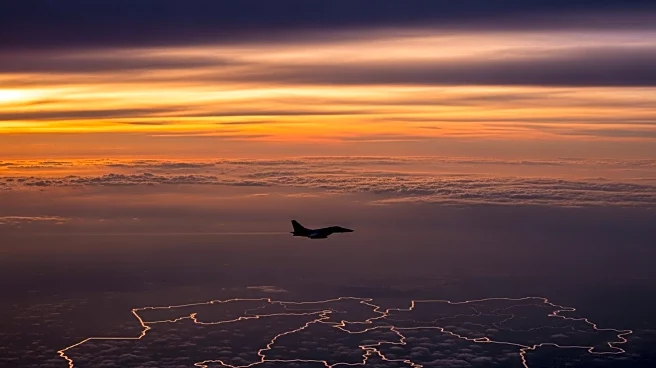
Burkina Faso has accused the Nigerian Air Force of violating its airspace after a Nigerian military aircraft made an emergency landing in the country. The incident involved a Nigerian Air Force C-130 aircraft that was en route to Portugal but had to land in Burkina Faso due
to technical issues. Burkina Faso's Territorial Administration Minister, Emile Zerbo, stated that the aircraft entered the country's airspace without authorization. The aircraft, carrying eleven Nigerian military officers, landed in Bobo-Dioulasso, Burkina Faso's second-largest city. The Nigerian authorities explained that the emergency landing was necessary for safety reasons. However, the Alliance of Sahel States (AES), comprising Burkina Faso, Mali, and Niger, issued a joint statement confirming the airspace violation and described the landing as an 'unfriendly act.' The AES has put its air forces on high alert, authorizing them to neutralize any unauthorized aircraft. The Nigerian military officers were briefly detained but later released and allowed to return to Nigeria.
Why It's Important?
This incident highlights the growing tensions in West Africa, particularly among the Sahel countries and Nigeria. The airspace violation accusation comes amid strained relations between the Sahel states and the Economic Community of West African States (Ecowas), from which Burkina Faso, Mali, and Niger have withdrawn. These countries have distanced themselves from Western influences and have been drawing closer to Russia. The situation underscores the fragile political and security dynamics in the region, where military-led governments are asserting their sovereignty. The incident could further complicate diplomatic relations and impact regional security cooperation, especially as Nigeria plays a significant role in regional peacekeeping efforts.
What's Next?
The Nigerian Air Force plans to resume its mission to Portugal, emphasizing its commitment to operational aviation procedures and safety standards. Meanwhile, the Sahel states' heightened alert status suggests potential for further military readiness and defensive posturing. Diplomatic efforts may be necessary to de-escalate tensions and prevent similar incidents in the future. The situation may also prompt discussions within regional and international forums about airspace management and military cooperation in West Africa.