



What's Happening?
A Richmond police officer was shot and injured during a response to a mental health crisis in the 2200 block of Key Boulevard. The incident occurred on Thursday evening when Contra Costa County’s A3 team, a behavioral health crisis response program, and Richmond police officers
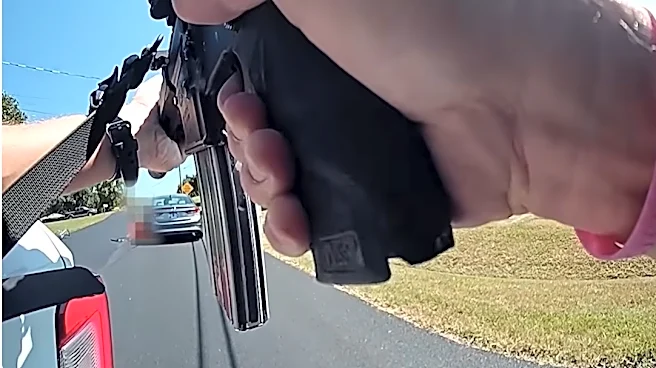
responded to a mental health check request. Upon arrival, the first officer on the scene was shot. The officer was transported to a hospital in stable condition and is expected to survive. The female suspect then barricaded herself inside the residence and continued to fire multiple rounds, striking a Richmond police patrol vehicle and neighboring homes. No other residents or personnel were injured. A standoff ensued, and chemical agents were eventually used to gain the suspect's compliance. She was subsequently arrested. Multiple agencies responded to the scene, and a shelter-in-place order for the area near Canyon Trail Park and Key Boulevard was lifted after the incident was resolved.
Why It's Important?
This incident highlights the significant dangers faced by law enforcement and mental health crisis response teams when intervening in situations involving individuals experiencing severe mental health episodes. The shooting of an officer underscores the unpredictable and potentially violent nature of such calls, even when specialized teams are involved. It also brings to the forefront the ongoing debate about the best practices for responding to mental health crises, particularly when a weapon is involved. The fact that the A3 team, a behavioral health crisis response program, was present indicates an effort to use a more integrated approach, yet the situation still escalated to violence. This event will likely prompt further review of protocols for joint responses between law enforcement and mental health professionals, aiming to enhance safety for both responders and individuals in crisis.
What's Next?
Following the arrest of the suspect, an investigation into the shooting and the events leading up to it will be conducted by law enforcement agencies. This will likely involve reviewing body camera footage, witness statements, and forensic evidence. The suspect will face charges related to the shooting of an officer and potentially other offenses, such as assault with a deadly weapon and discharging a firearm. The incident may also lead to internal reviews within the Richmond Police Department and Contra Costa County’s A3 team to assess their response protocols and identify any areas for improvement in handling mental health crisis calls, especially those with potential for violence. Discussions about enhanced training and resources for de-escalation and crisis intervention are also probable outcomes.
Beyond the Headlines
This incident sheds light on the complex intersection of mental health, law enforcement, and public safety. The involvement of a specialized behavioral health crisis response team (A3) alongside police reflects a growing national trend to address mental health emergencies with a more nuanced approach than traditional policing alone. However, the shooting demonstrates that even with such integrated efforts, the risk of violence remains. This raises deeper questions about the level of training and resources available to both police and mental health professionals when confronting armed individuals in crisis. It also underscores the need for comprehensive community mental health services that can intervene earlier and more effectively, potentially preventing such volatile situations from escalating to this degree. The incident serves as a stark reminder of the challenges in balancing care, de-escalation, and the imperative to protect lives.