






What's Happening?
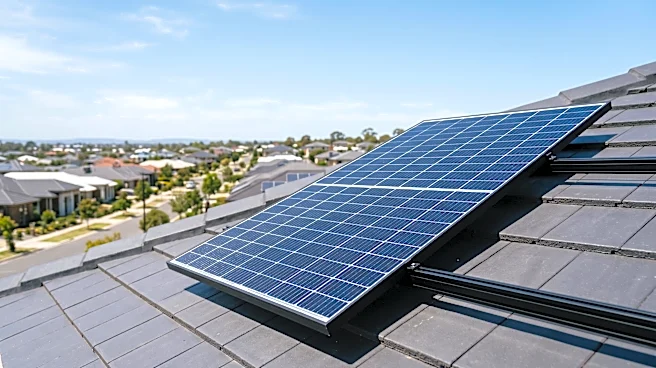
The typical cost for a home solar installation in the U.S. has surpassed $30,000 in the first half of 2026, following the expiration of the 30% federal tax credit. According to EnergySage's Home Electrification Marketplace Report, a standard 12-kilowatt
system now costs approximately $30,712 upfront. This increase reflects a rise in median quoted home-solar pricing to $2.57 per watt from $2.49 per watt in the latter half of 2025. The report also indicates a longer estimated payback timeline for homeowners, extending to 10.9 years from 10.1 years. While stand-alone solar prices remained relatively stable, combined system quotes, which include battery storage, saw a nearly 5% increase to $2.55 per watt before battery costs, attributed to the added labor and complexity of integrated installations. Financing options are evolving, with prepaid leases offering significant savings compared to cash purchases, modeled at 39% below on an effective cost-per-kilowatt-hour basis.
Why It's Important?
The rising costs and extended payback periods for home solar installations could significantly impact the adoption rate of renewable energy among U.S. homeowners. The expiration of the federal tax credit removes a substantial financial incentive, potentially making solar less accessible for many households. This shift could slow the growth of residential solar capacity, affecting national decarbonization goals and the solar industry's expansion. While financing options like prepaid leases offer some relief by reducing upfront costs, the overall increase in system prices and longer return-on-investment timelines may deter potential buyers. The disparity in state-level pricing, with Illinois having the highest median price at $3.07 per watt compared to Texas at $2.00 per watt, highlights regional economic factors and policy differences that influence solar market dynamics. This could lead to uneven solar adoption across the country, impacting energy equity and local grid stability.
What's Next?
The solar industry will likely focus on developing more attractive financing models and reducing installation costs to counteract the impact of the expired federal tax credit. Contractors are already facing labor pressures, with nearly 74% reporting increased hourly rates, and labor constituting 22% of total installed system costs. Innovation in equipment and installation processes will be crucial to bring down overall expenses. Homeowners will need to carefully evaluate various financing options, including leases and loans, to find the most cost-effective solutions. The continued strong customer interest in battery storage, despite its high cost and lower inclusion in proposals, suggests a growing demand for energy independence and resilience. Future developments may include more integrated solar-plus-storage solutions that are more affordable and easier to install, potentially driven by state-level incentives or utility programs designed to encourage grid modernization and energy storage adoption.
Beyond the Headlines
The increase in solar installation costs and the expiration of federal incentives underscore a broader challenge in transitioning to renewable energy: balancing economic viability with environmental goals. This situation could prompt a re-evaluation of federal and state energy policies, potentially leading to new incentive structures or regulatory frameworks to support solar adoption. The growing interest in battery storage, even with its current cost barriers, points to a shift in consumer priorities towards energy resilience and self-sufficiency, especially in regions prone to grid instability or extreme weather events. This trend could accelerate the development of smart home energy management systems and virtual power plants, where distributed energy resources contribute to grid stability. Furthermore, the regional price disparities highlight the need for localized policy interventions and market strategies to ensure equitable access to solar technology across diverse economic landscapes, addressing potential energy justice issues.