






What's Happening?
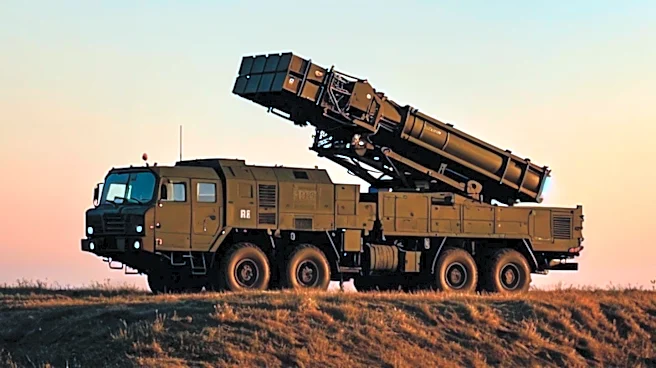
Japan has agreed to provide 4.3 billion yen (approximately 36.6 billion won) worth of defense equipment to the Philippines, marking its first transfer of complete military radar systems through its Government Security Capability Enhancement Assistance
(OSA) system. This is the largest support package Japan has provided to the Philippines to date. The agreement, signed by Japanese Ambassador to the Philippines Katsuro Kitagawa and Foreign Minister Maria Teresa Lazaro, includes military surveillance radar systems for the Philippine Navy and unmanned aerial vehicles for the Air Force. This initiative builds upon previous support provided since 2023, which included coastal surveillance radars and high-speed boats. The move is driven by shared security concerns regarding China's assertive actions in the South China Sea, where both the Philippines and Japan have territorial disputes with China.
Why It's Important?
This significant increase in defense assistance from Japan to the Philippines underscores a growing strategic alignment between the two nations in response to regional security challenges, particularly China's expanding influence in the South China Sea. For the Philippines, this aid will enhance its maritime domain awareness and surveillance capabilities, which are crucial for monitoring its territorial waters and exclusive economic zone. For Japan, strengthening the Philippines' defense capabilities contributes to the security of vital maritime transportation routes, including the Luzon Strait, which connects the South China Sea and the Pacific Ocean. This cooperation also signals a broader effort by regional allies to bolster collective security and maintain a balance of power in the Indo-Pacific, potentially influencing regional stability and international maritime law.
What's Next?
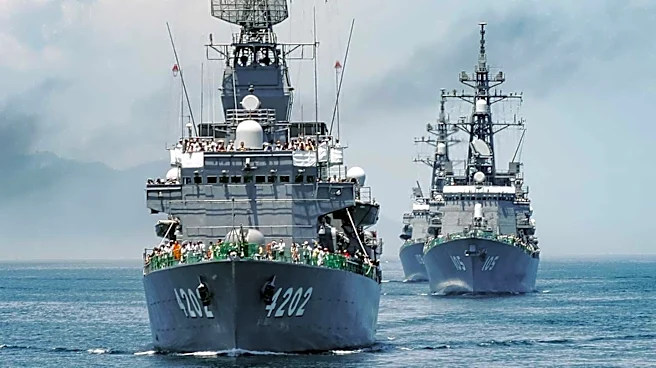
The delivery of the military radar systems and unmanned aerial vehicles is expected to take two to three years following procurement procedures. Beyond this immediate aid, Japan is also pursuing the transfer of used destroyers to the Philippines, indicating a deepening and broadening of defense cooperation that will include ship operation, maintenance, and manpower training. This ongoing collaboration is likely to lead to increased joint exercises and intelligence sharing between the two countries. The expanded defense ties could also encourage other nations with interests in the Indo-Pacific to enhance their security partnerships in the region, potentially leading to a more complex and interconnected security landscape. The long-term impact will depend on how China reacts to these strengthened alliances and whether it escalates or de-escalates its activities in disputed territories.
Beyond the Headlines
This development highlights a subtle but significant shift in regional security dynamics, moving beyond traditional bilateral alliances to more nuanced, issue-specific partnerships aimed at collective deterrence. The provision of advanced military equipment by Japan, a nation with a historically pacifist constitution, signifies a pragmatic adaptation to evolving geopolitical realities. Ethically, it raises questions about the balance between national sovereignty and regional stability, and the potential for an arms race in an already tense area. Legally, the enhanced surveillance capabilities could provide more evidence for international legal challenges regarding maritime claims. Culturally, such defense cooperation can foster stronger diplomatic ties and mutual understanding between nations, but also risks exacerbating existing geopolitical rivalries and nationalistic sentiments in the region.