

What's Happening?
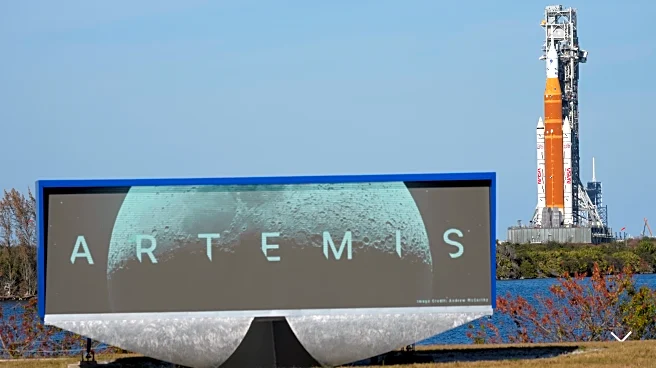
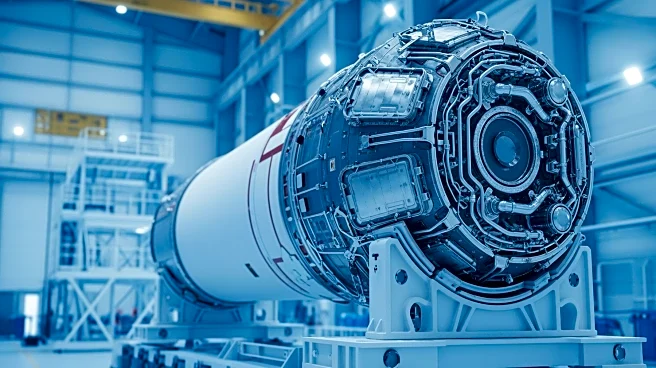
NASA is rolling back its Artemis 2 moon rocket from the Kennedy Space Center's Launch Pad 39B to the Vehicle Assembly Building to address a helium flow issue in the Space Launch System's (SLS) upper stage. This decision follows a successful wet dress rehearsal
(WDR) completed on February 19, which initially set the stage for a potential March 6 launch. However, an interruption in helium flow, crucial for pressurizing the rocket's propellant tanks, was detected overnight from February 20 to February 21. The rollback, scheduled for February 25, will involve a four-mile journey using NASA's Crawler-Transporter 2 vehicle, expected to take up to 12 hours. This move is necessary to troubleshoot the helium issue, which affects the rocket's ability to hold approximately 730,000 gallons of liquid hydrogen and liquid oxygen.
Why It's Important?
The Artemis 2 mission is a critical step in NASA's plan to return humans to the moon, marking the first crewed mission in the Artemis program. The mission aims to send four astronauts on a 10-day journey around the moon and back to Earth. Addressing the helium flow issue is vital to ensure the safety and success of the mission. The delay in the launch window, now pushed beyond March, highlights the complexities and challenges of space exploration. Resolving these technical issues is crucial for maintaining the timeline and integrity of NASA's broader lunar exploration goals, which include establishing a sustainable human presence on the moon.
What's Next?
With the March launch window no longer feasible, NASA is looking towards the next available window starting April 1, with additional opportunities between April 3-6 and on April 30. The resolution of the helium flow issue will be a priority to ensure the Artemis 2 mission can proceed safely. The mission's success is pivotal for future Artemis missions, including Artemis 3, which aims to land astronauts on the lunar surface. Stakeholders, including NASA and its international partners, will closely monitor the troubleshooting process and subsequent testing to ensure all systems are go for the revised launch schedule.