




What's Happening?
Arizona Attorney General Kris Mayes is scheduled to hold a session in Mesa to address concerns regarding data centers. This meeting comes after a previously planned session in Ahwatukee was canceled. The focus of the session is expected to be on complaints
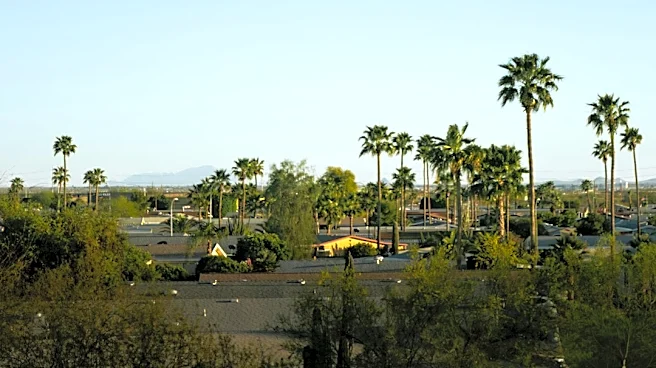
and issues related to data center operations, particularly concerning construction activities. A specific instance highlighted involves Menlo Digital's data center in Ahwatukee, where construction crews reportedly began work before sunrise. Phoenix's winter hours, effective October 16, stipulate that construction cannot commence before 7 a.m. without a special permit. City Planning Director Joshua Bednarik has informed residents that Menlo Digital will not be granted such a permit.
Why It's Important?
The decision by Attorney General Mayes to host a session in Mesa underscores the growing public and governmental scrutiny of data center operations, particularly their impact on local communities. The complaints about early morning construction at the Menlo Digital site in Ahwatukee highlight a broader issue of how large-scale industrial developments can disrupt residential areas. This situation brings to light the tension between economic development, represented by data centers, and the quality of life for residents. The involvement of the Attorney General's office suggests that these concerns are being taken seriously at a state level, potentially leading to stricter regulations or enforcement regarding construction hours, noise pollution, and other community impacts. This could set a precedent for how future data center projects are managed and integrated into existing communities across Arizona.
What's Next?
The upcoming session in Mesa will likely serve as a platform for residents and stakeholders to voice their concerns directly to Attorney General Mayes. It is anticipated that the Attorney General's office will gather information and potentially outline steps for addressing the issues raised, particularly those related to construction practices and adherence to local ordinances. Following the session, there could be increased oversight of data center construction projects, and potentially, new guidelines or enforcement actions to ensure compliance with local regulations, especially concerning noise and operating hours. The outcome of this session could influence future permitting processes for data centers in Arizona and may lead to a more formalized framework for community engagement and impact mitigation for such developments.
Beyond the Headlines
The controversy surrounding data center construction in Arizona touches upon several deeper implications beyond immediate noise complaints. It highlights the broader challenge of balancing rapid technological expansion with environmental and community well-being. As demand for data storage and processing grows, more data centers are being built, often in or near residential areas. This trend raises questions about urban planning, zoning regulations, and the long-term sustainability of such developments. The incident also underscores the importance of transparent communication and proactive engagement between developers, local governments, and communities to prevent conflicts. The Attorney General's involvement could signal a shift towards a more comprehensive approach to regulating the tech industry's physical footprint, considering not just economic benefits but also social and environmental costs.