







What's Happening?
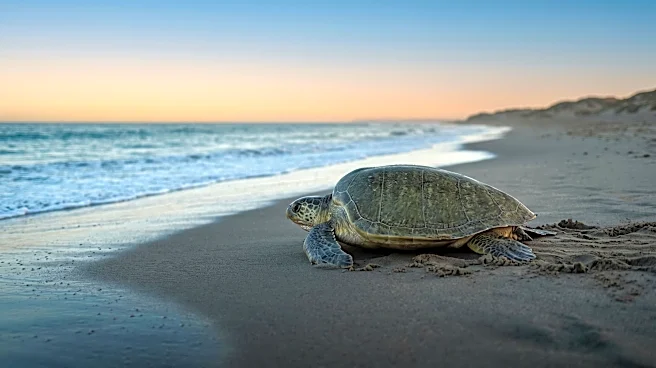
A female olive ridley sea turtle has made history by laying two nests on the Southern California shoreline, marking the first-ever documented nesting of this highly endangered and protected species on the U.S. West Coast. NOAA Fisheries confirmed the two nesting sites
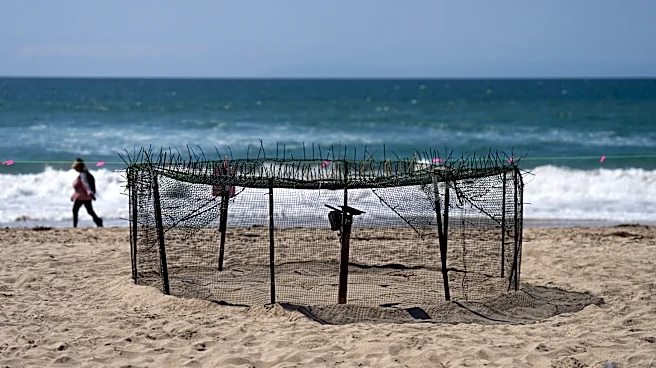
in Orange County, California. The first nest was discovered after the turtle was filmed laying eggs and covering the nest in Seal Beach. A second sighting, believed to be the same female, occurred in Huntington Beach, where she was observed laying more eggs before returning to the ocean. Justin Viezbicke of NOAA Fisheries noted the turtle's unusual behavior, as she nested during the day and at sunset, rather than the typical nighttime nesting. Each nest is estimated to contain between 50 to 100 eggs. Both nesting areas have been cordoned off, and warning signs have been posted to protect them, with the public urged to stay away to give the eggs the best chance of hatching. The incubation period for these eggs is expected to be between 45 and 60 days, with temperature playing a crucial role in their development.
Why It's Important?
This unprecedented nesting event is significant for conservation efforts of the olive ridley sea turtle, a species classified as highly endangered. The West Coast nesting expands the known reproductive range of these turtles, potentially indicating a shift in their migratory or nesting patterns, or a response to environmental changes. The successful hatching of these eggs could contribute to the population recovery of this vulnerable species. For marine biologists and environmental agencies like NOAA Fisheries, this event provides a unique opportunity to study the factors influencing sea turtle nesting behavior and habitat selection in new regions. It also highlights the importance of coastal conservation and public awareness in protecting endangered marine life. The presence of these nests on popular California beaches underscores the need for careful management of human activity in coastal areas to prevent disturbance to sensitive wildlife. The event could also spur increased funding and research into understanding and protecting olive ridley sea turtles.
What's Next?
In the coming weeks, officials will closely monitor the two documented nesting sites in Seal Beach and Huntington Beach. The incubation period, which typically lasts between 45 and 60 days, will be critical for the potential hatching of the estimated 50 to 100 eggs in each nest. Public cooperation in staying away from the cordoned-off areas will be essential to ensure minimal disturbance and maximize the chances of successful hatching. NOAA Fisheries and other conservation groups will likely continue to observe the coastal areas for any further nesting activity, given the unusual daytime behavior of the female turtle, which suggests there could be other undiscovered nests. Research efforts may also focus on understanding why this olive ridley sea turtle chose the West Coast for nesting, potentially involving genetic analysis or tracking of the individual. If hatchlings emerge, their survival will depend on continued protection and favorable environmental conditions.
Beyond the Headlines
The appearance of olive ridley sea turtle nests on the U.S. West Coast carries broader implications beyond immediate conservation. It could signal a potential expansion of the species' habitat due to factors such as ocean warming, changes in food availability, or shifts in ocean currents, which are all linked to climate change. This event might prompt a reevaluation of existing marine protected areas and conservation strategies to include new or expanded critical habitats. Ethically, it raises questions about human responsibility in coexisting with endangered species, particularly in densely populated coastal regions. The public's response to the call for non-interference with the nests will be a test of environmental stewardship. Furthermore, this rare occurrence could inspire educational initiatives to raise awareness about marine biodiversity and the impacts of human activities on ocean ecosystems, fostering a deeper connection between communities and the natural world. It also underscores the dynamic nature of ecosystems and the continuous need for adaptive conservation approaches.