
What's Happening?
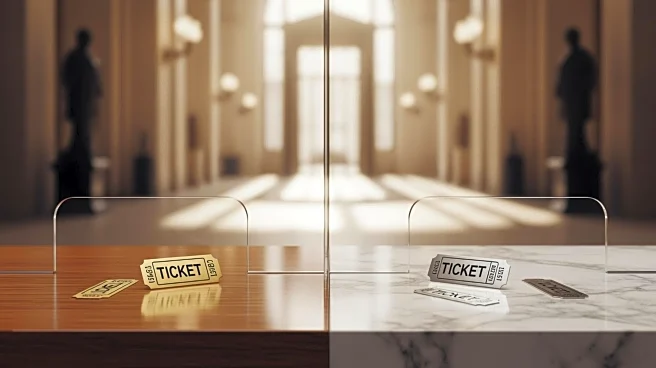
The Louvre Museum in France has introduced a dual pricing system, increasing entry fees for non-European Union visitors by 45%. This change, effective immediately, raises the ticket price for non-EU visitors to €32,
compared to the previous flat rate of €22. The French government justifies this move as a means to generate an additional €20-30 million annually, which will be used for renovations and to address security concerns following a significant jewel heist. The dual pricing system, common in less affluent countries, is rare in Europe and has sparked debate over its fairness. Critics argue it discriminates against low-income foreign visitors, while supporters see it as a necessary measure to fund cultural preservation.
Why It's Important?
The introduction of dual pricing at the Louvre highlights a broader trend of cultural institutions seeking alternative revenue streams amid financial pressures. This decision could set a precedent for other European cultural sites, potentially affecting international tourism dynamics. For U.S. visitors, who constitute a significant portion of the Louvre's foreign audience, this price hike may influence travel plans and perceptions of accessibility to European cultural heritage. The policy also raises questions about equity and access to global cultural treasures, challenging the balance between financial sustainability and inclusivity.